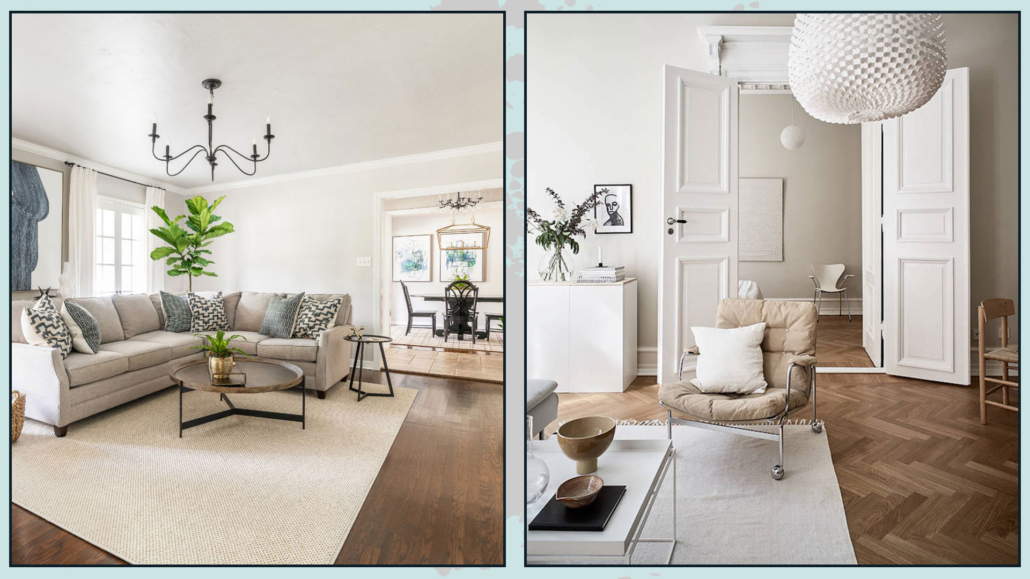
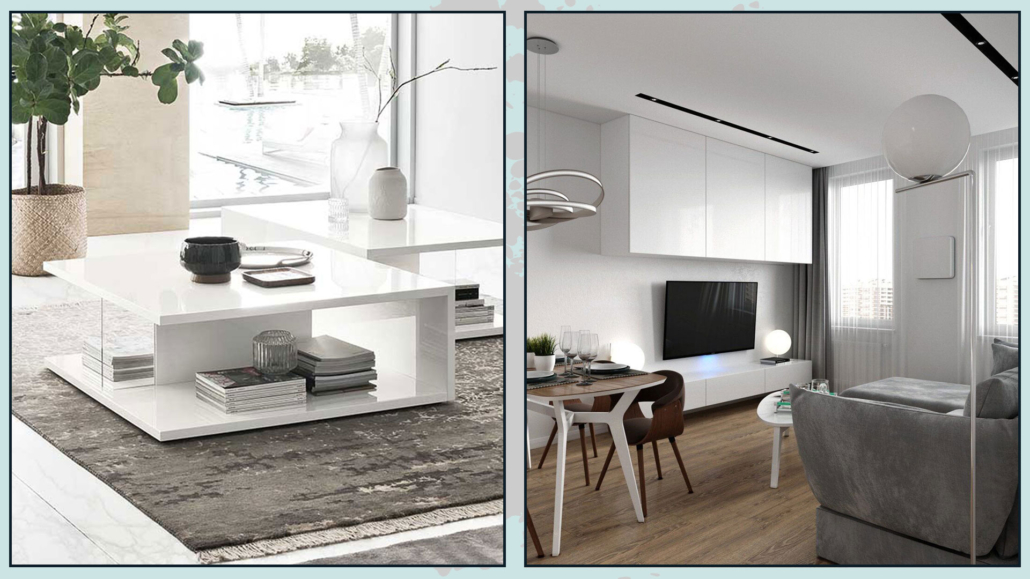
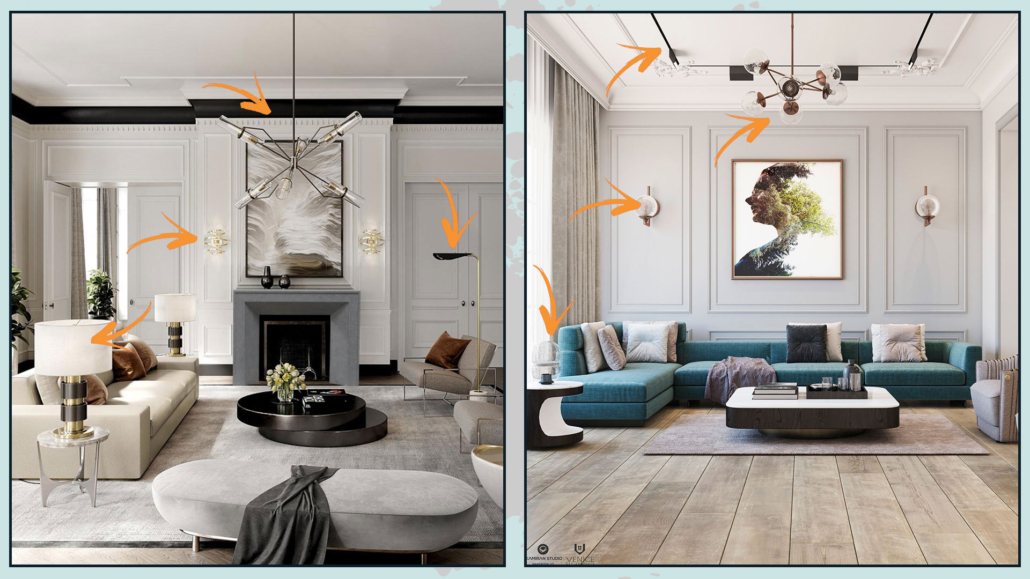
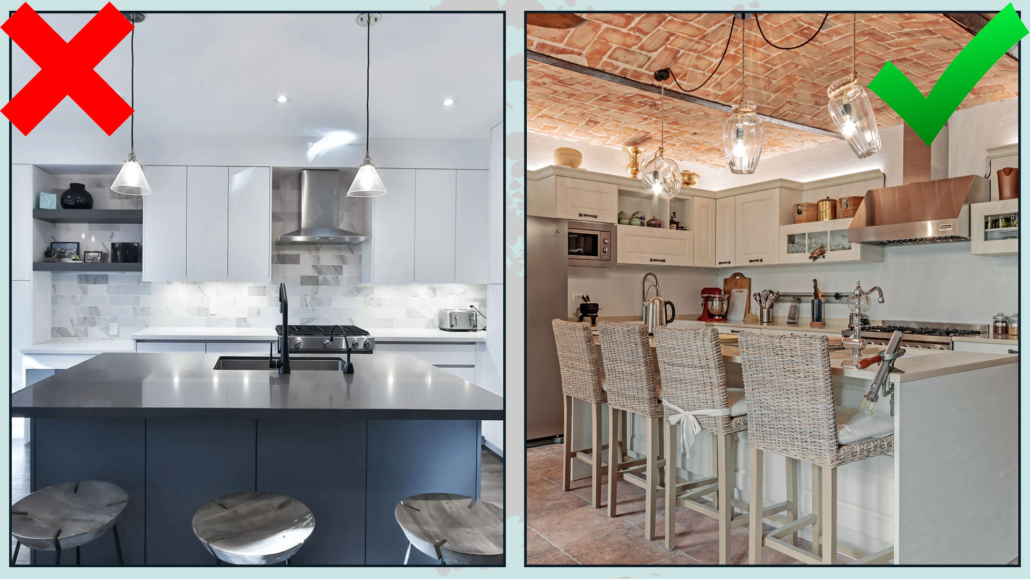
How to choose the proper lighting for your home?!
It’s a question I’m often asked, so I decided to answer it with this article.

We know perfectly well that lighting is absolutely essential, and the wrong lighting can ruin your entire furnishing and décor project.

As mentioned other times, you could choose the most beautiful furniture, the best colors, and the finest materials, but if you get the lighting wrong, everything will fade away!

I’ve already discussed lighting by explaining color temperatures, color rendering, and more (you can find the video here!).

Today, I want to focus on choosing the right lights for your home and how to position them correctly for perfectly lit spaces!

Let’s first look at the different types of lighting based on their function.

We can divide lighting fixtures into two main categories:

– decorative

– architectural

(credits: Mooeilight; cb2.com; shopee.com; amazon.com; pinterest; obsoleteinc.com; astrolighting.com; indiamart.com)

DECORATIVE LIGHTS

Decorative lights, of course, provide illumination, but they also enhance the design and aesthetics of our spaces.

They come in various forms:

– Chandeliers

– Table lamps

– Floor lamps

– Wall lamps


(Mooeilight; cb2.com; pinterest; obsoleteinc.com)

And each can have different styles!

In addition to providing illumination, decorative lights enhance the design and aesthetics of a space.

Therefore, they are essential elements when designing the décor of any space.

To understand how to choose the right lights for your home, we need to consider two key aspects:

– How the light spreads

– Shape, style, and color

HOW THE LIGHT SPREADS

– SHADED LAMPS

Shaded lamps emit a soft, even light.

This type of lamp helps create the room’s general lighting.

Chandeliers, table lamps, floor lamps, or wall lamps with shades help create a warm and inviting atmosphere.

These lamps are ideal for areas where you want to relax, such as the bedroom or living room.

(credits: urbanoutfitters.com; behance.net)

– DIRECT LIGHTING

This type of lighting illuminates specific areas for tasks like reading, studying, drawing, eating, or cooking!

In addition to being highly functional by providing the right light for each activity, these lights are also a key part of the décor.

(credits: amazon.it)

Depending on how a lamp emits light, it will be more suitable for certain areas than others.

So, this is the first aspect to consider when choosing a lamp!

SHAPE, STYLE, AND COLOR

Once you’ve determined the best type of lamp based on how it emits light, you’ll need to choose its shape, style, and color to match the design you’ve selected for your home!

For example, if you love the minimalist style, you can use lamps with simple shapes and clean lines to maintain the style. Or, if you enjoy mixing, you can add lamps that contrast, making them the focal point!

(credits: jdpinteriors.com)

In a room, there are usually several decorative lamps.

These lamps should have a common thread to ensure the space feels cohesive and harmonious.

You can achieve it by using lamps with similar shapes but different colors and materials or, on the contrary, lamps with different shapes but the same material and color!

ARCHITECTURAL LAMPS

Architectural lamps are subtle lights that, in a way, are part of the structure of a space; for this reason, you can use them regardless of the home’s style.

They are practical and functional for illuminating areas.

We can include in this group:

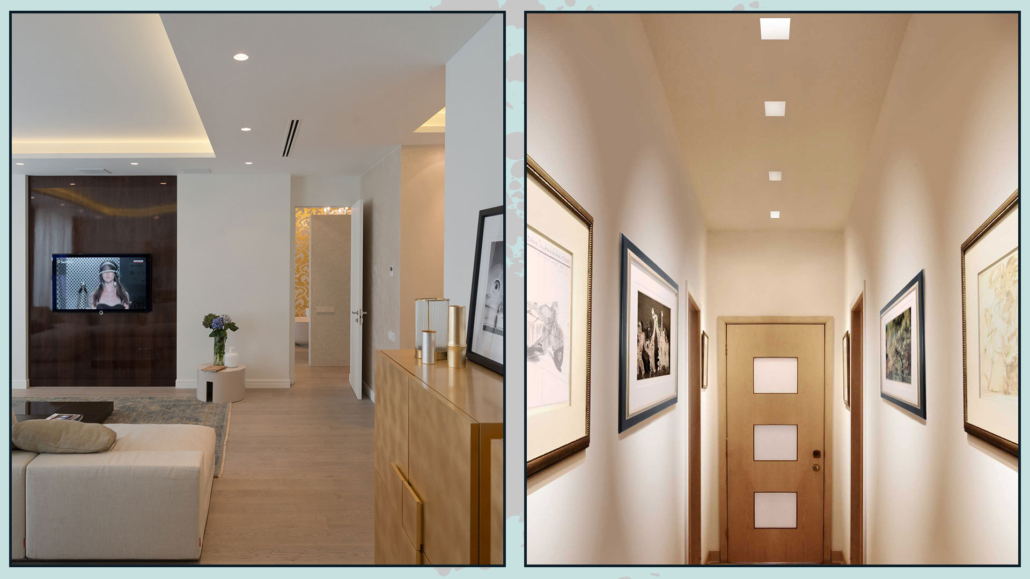
– Recessed spotlights

– Ceiling lights

– Regular spotlights

– LED strips

(shopee.com; amazon.com;astrolighting.com; indiamart.com)

In addition to illuminating spaces, these elements can highlight decorative objects or architectural features.

Let’s see where and how to use these lights.

– RECESSED SPOTLIGHTS

People commonly use recessed spotlights for general room lighting.

A false ceiling made of drywall is required to install them.

They are functional and discreet lamps that one can use in any room without altering the style.

They can have a wide or narrow light beam.

You can use recessed spotlights with wide beams anywhere as general lighting.

If the beam is narrow, they are best used to highlight a specific area, such as a wall with unique wallpaper or beautiful artwork.

(credits: lednews.lighting; splash-of-light.co.uk)

– CEILING LIGHTS

Ceiling lights fulfill the same purpose as recessed spotlights and work well when you cannot have or do not want a false ceiling.

Their primary function is to provide general lighting.

There are countless different shapes of ceiling lights, and you will need to find one that best fits the shape, style, and color to match the room’s décor!

(credits: archiexpo.com; lampadaribartalini.it)

– REGULAR SPOTLIGHTS

On the other hand, regular spotlights usually have a narrow light beam, which makes them perfect to highlight a specific area, such as an architectural detail, a painting, a sculpture, or a wall with a unique texture!

You have to position spotlights to point exactly where you want them.

There are also spotlights mounted on tracks.

They’re ideal for spaces without a false ceiling but with a single central light source.

Thanks to the track, you can still distribute the light evenly.

(credits: Vicki Fabian; ikea.com)

– LED STRIPS

Thanks to their versatility, LED strips have become widely used in interior design for the past few years!

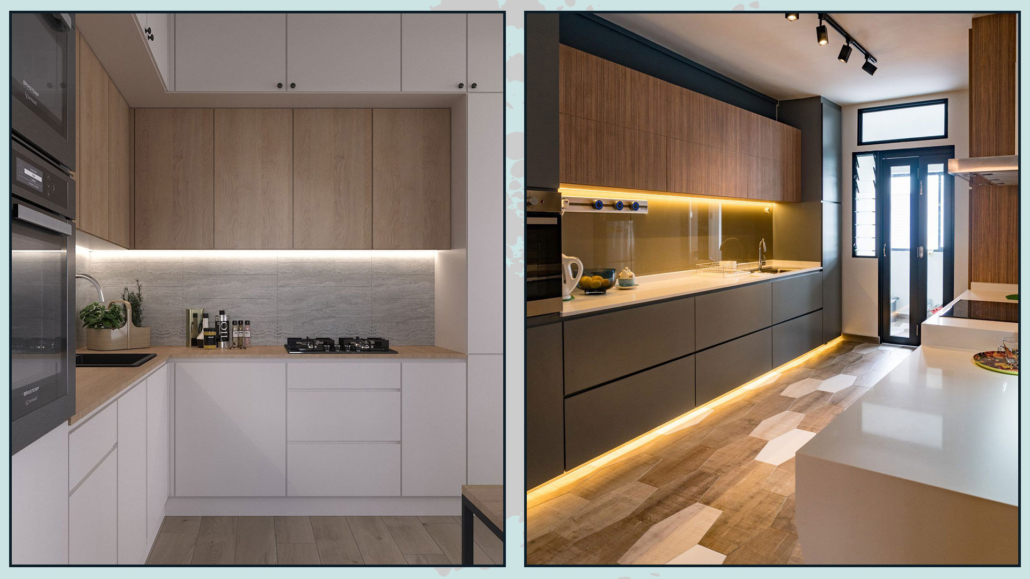
LED strips can define volumes and illuminate furniture or functional areas like beneath kitchen cabinets!

They emit a soft, diffused light, perfect for general lighting and setting the mood!

(credits: krow.rs; maisondorstudio.com)

SOME ADVICE

Now that you know the various types of lighting, I’d like to give you a few tips on how to better plan the lighting for your spaces:

– Use multiple lamps

One light source is not enough to properly illuminate a space and create contrast and depth!

The ideal setup is layering light: having general lighting to fully illuminate the room, spotlighting to highlight specific areas, and task lights that assist with activities like cooking, reading, studying, and so on.

– Be careful how space will be used

Try to understand how you will use a particular space to determine which lights to choose!

For example, in a study, you’ll need specific table lamps to make the space more comfortable for working.

– Design the lighting system

When designing a lighting system, base it on how you want to arrange the furniture in the room.

This way, you’ll have a truly functional and efficient lighting setup!

Otherwise, the risk is having lights in places where they’re not needed and lacking them where they are.


I hope you enjoyed this article and found it helpful.

If so, don’t hesitate to share it with someone you think might be interested; I would be honored, and it will help me get known.

If you feel that your home, or any part of it, doesn’t reflect you enough, don’t wait any longer: fall in love with your place again and book your consultancy!

Is it possible to transform spaces, at least visually?

Of course, it is, without construction work, only with… color!!!

Color has the power to alter our perception of spaces.

That means it can optically change the appearance and proportions of a room, making it feel taller or shorter, smaller or larger, and so on!

Therefore, color is a fantastic ally for those unique spaces: when used correctly, it can trick the mind and give us the impression of entirely different dimensions.

Today, I’d like to share some tips on using color to your advantage to visually transform spaces in line with what you want to express in them!

– LIGHT COLORS AND DARK COLORS

This difference is quite well-known: light colors enlarge, while dark colors make spaces feel smaller.

Light colors also make a space brighter because they reflect light.

If you need to make a space feel huger, it’s best to use light colors everywhere: on the ceiling, walls, and floors.

Using light colors also for the furniture will amplify the effect.

While white is undoubtedly the color that reflects light the most, I don’t mean only white when I refer to light colors.

ANY color in its lighter, less saturated shades can help make spaces feel bigger!

While it’s true that dark colors make spaces feel smaller, they also create a sense of “closeness.”

The space feels cozier.

The risk is making a space feel a bit stifling, but when used in large, well-lit areas, the result can be stunning!

(credits: posterstore.it; room108.be)

– WARM COLORS AND COOL COLORS

We all know warm colors include shades like red, yellow, and orange because they evoke images of sunsets, fire, and similar elements.

They create a sense of warmth, bring cheer, and feel inviting, setting up pleasant atmospheres.
Warm colors shrink the spaces, making them more intimate and cozier.

On the other hand, cool colors include blues, purples, and greens, as they remind us of water and nature.

They give a sensation of freshness, serenity, and relaxation.

Cool colors also help to visually enlarge spaces by creating the illusion that walls are receding.

That makes them ideal for tight spaces like hallways or small bathrooms.

When choosing a color, it is crucial to understand the room’s specific conditions to select the proper shade, the one that will absolutely help you experience the feelings you want in that space.

(credits: Cleo Scheulderman; talianbark.com)

– NEUTRAL COLORS

Neutral colors have a significant visual impact!

Remember that, aside from pure neutrals like white, gray, and black, all other neutrals have an undertone you need to consider.

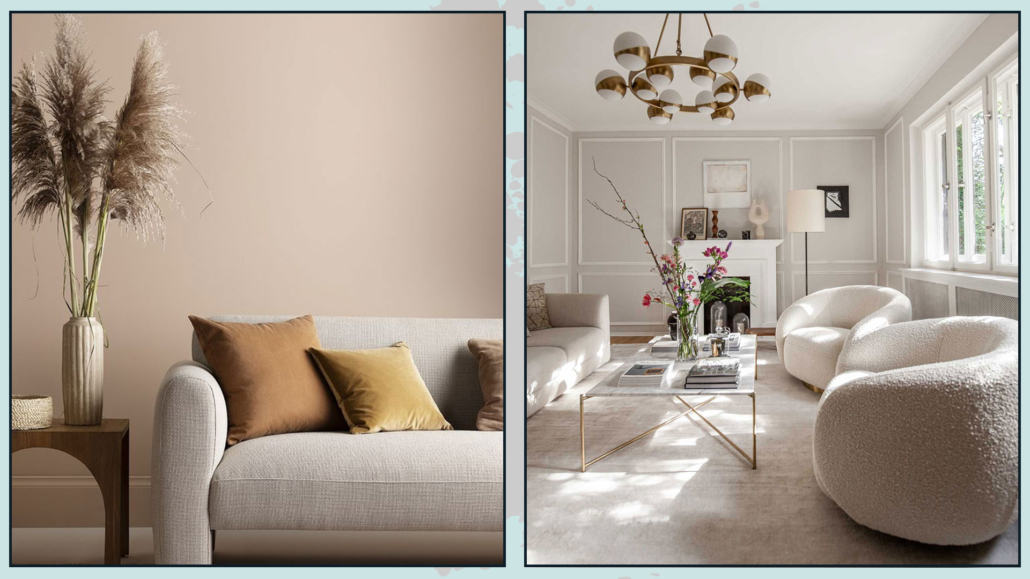
The undertone is what makes all the difference in the final result, as it determines whether a neutral appears warm or cool.

Even among warm neutrals, the undertone will influence whether a space feels more yellowish or rosy, and this will, of course, affect the perceived mood.

I discuss neutral colors in greater detail here.

Neutral colors are fantastic as a background or base in interior design as they’re incredibly versatile, pairing well with any style and color!

(credits cocolapinedesign.com; H&M Home)

– VISUAL EFFECTS

Now that you know how colors can visually change the appearance of a room, let’s explore how to use them to create specific visual effects!

– Lower/Raise the Ceiling

If you have a room with a low, somewhat suffocating ceiling, paint the walls and leave the ceiling white.

That will instantly give the impression of a taller room.

On the other hand, if the ceiling is high and feels too expansive, paint it a darker color than the walls!

Visually, the ceiling will seem lower, creating a cozier and more intimate atmosphere.

(credits: @coelholimaarq)

(credits: Future; summerthorntondesign.com)

– Widen/Narrow the Space

To make a space appear larger, use a darker color on the ceiling and the farthest wall while keeping the side walls light.

That will visually bring the ceiling and the far wall closer, creating the illusion of a larger room.

That trick works wonders for long and narrow spaces like hallways!

To narrow the space, do the opposite: keep the far wall and the ceiling light and use darker colors on the side walls.

That will elongate the room slightly, making it feel more proportionate.

(credits: @coelholimaarq)

(credits: @IndiverPlast; stherbb.us)

– Shorten the Space

To make a generous space feel more intimate, paint the far wall darker while keeping the other surfaces light.

The far wall will appear closer, making the space more inviting and cozy.

(credits: @coelholimaarq; kmdesignco.com)

– Narrow the Walls

To “shorten” the walls and make them feel narrower, the ideal solution is to add a dark-colored stripe along the upper part of the wall.

(credits: @coelholimaarq; living.corriere.it)

– Enlarge/Shrink the Space

As mentioned earlier, with light and dark colors, paint all surfaces in light tones to make a space feel larger by reflecting more light.

That creates the effect of a more open and airy room.

Use the same color on walls and ceiling for an even more powerful effect.

On the other hand, if you want to make a room feel smaller, opt for warm, dark colors.

As we’ve seen, these tones bring surfaces closer together.

That approach is perfect for huge rooms that otherwise might feel “empty” or impersonal!

(credits: @coelholimaarq)

(credits: tailoredspace.com.au; igorsirotovarchitects.artstation.com)

As you’ve seen, color is indeed a fantastic ally.

Not only does it set the mood of a room, but it can also help transform visually unique spaces, like long and narrow hallways…

I hope you enjoyed this article and found it helpful.

If so, don’t hesitate to share it with someone you think might be interested; I would be honored, and it will help me get known.

If you feel that your home, or any part of it, doesn’t reflect you enough, don’t wait any longer: fall in love with your place again and book your consultancy!

How correctly to furnish the entryway? It’s a question I’m often asked!

The entryway is your home calling card, the first impression a guest will have of the rest of the house.

The entryway is a transition from the outside world to the heart of your home, so it should be welcoming and give a sense of the style and atmosphere that awaits inside!

First, you should interpret your available space: a small space does not necessarily have to be less welcoming than a large one!

Sometimes, the opposite is true because a generous space can feel empty and impersonal!

You can create a welcoming entryway even if you don’t have one walking straight into the living room!

Let’s go over 6 rules for furnishing your entryway perfectly, no matter the available space!

1 – FLOORING OR RUG

As we mentioned earlier, the entryway is a transition from the outside to the inside, so ideally, the flooring should highlight this transition.

You could choose different flooring from the rest of the house, which is ideal if your entry leads directly into the living room to divide the two areas visually.

You’d want to avoid having two floors with strong contrasts in a tiny space, but different flooring helps define specific areas.

Alternatively, you could use a rug: only remember to choose one simple to clean.

That can help prevent guests from bringing dirt into the rest of the house!

Naturally, having a doormat outside the door is also helpful to get rid of most of the dirt.

(credits: karstinteriors.com; Stefania Damaggio; Pinterest.com)

2 – ALWAYS HAVE A SURFACE TO SET THINGS ON

It’s paramount to furnish the entryway with a surface whose dimension will depend on the available space.

It could be a beautiful round table in the middle of the room, a console table against the wall, or even a simple shelf!

First and foremost, it’s functional because it’s where you’ll “empty your pockets” when you come home, but it will also serve as the focal point of the entryway.

You can place a lovely plant, a vase of flowers on it, or a tray with candles or diffusers. In short, you can decorate it as you see fit!

That is where you give a preview of your home’s style!

If space allows, you could add a small seat, like a simple pouf!

It can be handy if you change your shoes right at the entrance.

(credits: amazon.com; studio-mcgee.com; ohmeohmyblog.com)

3 – LIGHTING

To welcome your guests, lighting in the entryway is vital; you should study it, recalling that there is a transition from the outside, where lighting is totally different.

Get creative, for instance, using recessed ceiling lights: as for the flooring, if your entryway opens into the living room, lowering the ceiling can visually separate the two areas.

You can furnish the entryway with unique and original chandeliers or wall sconces, anything that not only lights the space effectively but, like the surface area, gives a sense of your home’s style and atmosphere!

Play with different types of lighting: use recessed lights or chandeliers for general lighting, but where possible, add a floor lamp or a beautiful table lamp to create a cozy ambiance!

(If you want to know a little more about how to correctly light I talk about it here)

(credits: vogliadiristrutturare.it; amazon.it; houseofjadeinteriors.com)

4 – STORAGE ELEMENTS

When someone visits you, especially in winter, they’ll likely have something to take off and set down, and the same goes for you when you come home!

Of course, a built-in closet isn’t always possible, but many different solutions on the market can adapt to any space.

There are open shelving units that function as coat racks, classic coat racks, or even wall-mounted hooks—some are incredibly original and, when placed correctly, can be very artistic!

You can add a few baskets for smaller items; this will also give a stylish touch to the entryway!

And don’t forget an umbrella stand—if it rains, at least you won’t have wet umbrellas dripping all over the place!

(credits: cutlerkitchenandbath.com; dienlanhsapa.com; elmueble.com)

5 – MIRROR

Having a mirror at eye level in the entryway is very important because:

– You can take a final look at yourself before heading out;

– Your guests can check they look presentable before fully entering the house!

That is a detail not to overlook! Just as you prepare your home when expecting guests, they also want to look their best when visiting you. Coming in from outside, they might need a quick touch-up, so give them that chance!

Depending on the space, you can place a beautiful mirror above the console table or create a composition of mirrors—feel free to get creative according to your style!

Plus, the mirror will help enlarge the space by reflecting light!

(credits: twotwentyone.net; Marina Karpilovsky; lagnappe.com)

6 – PLANTS AND FRESH FLOWERS

By now, you know that plants are vital in any room of the house; in the entryway, they also have a psychological significance: as earlier mentioned, the entryway is the transition space from outside to inside, and plants help to create a smoother connection (even if you live in the city!).

Plants, vases with branches, leaves, or fresh flowers, it doesn’t matter; what is paramount is to have something, even tiny, that brings a touch of nature!

Plants also add fragrance, texture, and color, making them ideal for decorating an entryway!

(credits: brainstudy.info; Muebles Home Direct; amazon.es)

I hope you enjoyed this article and found it helpful.

If so, don’t hesitate to share it with someone you think might be interested; I would be honored, and it will help me get known.

If you feel that your home, or any part of it, doesn’t reflect you enough, don’t wait any longer: fall in love with your place again and book your consultancy!

Having a small bathroom is really a problem, and in homes where there are two, generally at least one is indeed tiny, maybe even without a window.

The small bathroom is a very challenging space to design, but with a few small tricks, you can make it look bigger, functional, and even definitely trendy!

Let’s look at them together.

– MEASURE THE SPACE

Measure the available space is the first step to understanding how to proceed and buy proportionate elements!

Specific standards exist for the minimum distances between fixed elements like the toilet and bidet. Once you have identified and positioned them correctly, you can decide on the sink (with or without a cabinet), shower or bathtub, and everything else.

(credits: besidebathrooms.com)

Regarding the sink, avoid placing or wedging it in large cabinets that rest on the floor: it’s better to use wall-mounted cabinets, simple shelves, or light, open structures.

Being able to see beyond or having floor space amplifies the space visually.

(credits: Sonia Meneghin; xlab.design)

Remember, for the sink, there is no minimum size; it depends on how you use it and your needs.

For a secondary bathroom, a smaller sink could make a difference!

(credits: scarabeosrl.com; homedesignlover.com)

If you opt for a hugger sink, beware of its proportions relative to the available space!

Sometimes, it’s just a matter of paying attention to the shape: a rounded sink might be more functional than a square one!

Once you have identified the positions of the fixed elements, you can choose the rest, such as materials and colors, that can help visually enlarge the bathroom.

– WALL-MOUNTED FAUCETS

It may seem trivial, but having wall-mounted faucets allows you to save space by reclaiming those extra centimeters where the faucet is anchored.

A wall-mounted faucet adds a touch of style to the bathroom and is also super functional for cleaning: there won’t be that annoying ring that forms on the sink around the faucet!

(credits: alliedmaker.com; espace-aubade.fr)

With a bowl-type sink placed on a cabinet or shelf, you can also position the faucet on the side.

(credits: group-hadara.com; looox.nl)

– COLORS (light and… dark!)

The trick to make a bathroom appear hugger is to use very little contrast with the colors!

Light colors will illuminate and give a lot of space to the bathroom.

Everything should be light: walls, fixtures, furniture, and details like handles; the latter will illuminate even more if they have a glossy finish!

By light, I don’t necessarily mean white, but any color used in a light, desaturated version.

(credits: thehappyhousie.porch.com; Meg Graf Designs)

Even the curtains should be light and airy, perhaps Roman shades partially pulled up… it’s a small detail that will instantly make the space look larger.

(credits: helloalva.com; ph Michael J. Lee)

However, you should know that you are NOT forced to use only light tones.

It may seem strange, but very dark colors, especially in windowless bathrooms, create a sense of depth and give the illusion of a larger space!

The trick, with dark colors too, is to use very little contrast: everything should be dark (except for the fixtures; if you prefer!).

Another clever strategy is to use glossy colors to reflect light everywhere!

Just as light colors don’t necessarily mean white, dark colors don’t automatically mean black.

Instead, use intense colors and low lighting to make everything appear more dramatic!

(credits: dezignark.com; homedit.com)

– SHOWER ENCLOSURES AND BATHTUBS

It is ideal, whenever possible, to have shower enclosures and bathtubs without frames, as frames create a barrier.

Where a frame is necessary, it should be as minimal as possible and light (if you choose dark colors, it should be dark but still minimal).

Where possible, you can also use a simple fixed panel!

(credits: Jacqui Turk; casework.it)

Of course, in the case of a shower without a door, you will need to pay particular attention to the drain, ensuring it is hugger than usual to avoid water spilling all over the bathroom!

If you have a bathtub, you can opt for a curtain.

When opened, it will create no visual barrier and add a touch of color to the bathroom.

(credits: lovegrowswild.com; stranddesign.com)

– LARGE PATTERNED WALL COVERINGS

Wallpaper or tiles with large patterns help give the impression of a larger space.

The larger the pattern, the more spacious the room will seem!

Going “out of scale, out of proportion,” in this case, is absolutely recommended, so feel free to unleash your creativity!!

(credits: anewall.com; etsy.com)

If you don’t like large patterns, you can choose small patterns ONLY as long as they are tone-on-tone with very little contrast.

That will give the impression of a color rather than a pattern.

(credits: jenkinsinteriors.com; rebeccaatwood.com)

If the pattern you like is particularly bold and busy, consider using it only on the upper half of the wall and tiling the lower half to lighten things up a bit!

– TILES

If you prefer not to use wallpaper but tiles, a trick to make your bathroom appear larger is to tile all the walls up to the ceiling.

That will give a nice effect to your small bathroom!

As with patterns, the ideal is to use huge tiles and minimize the visibility of grout lines as much as possible!

It’s not necessary to have all the walls with the same tile; you can change it in the shower/bathtub area, always being careful to use little contrast!

(credits: redefineinterior.com; lashopagranite.com)

As for the floor, in addition to large tiles, it’s a great idea to use the same tile for the shower floor.

A material change creates a boundary, which makes the space look smaller.

If you don’t have a shower but a built-in bathtub, you can consider tiling the surround with the same tile as the floor.

(credits: hupehome.com; i1.wp.com)

– MIRROR THE ENTIRE WALL

A mirror reflects light, which will instantly make the space feel larger.

So, consider a large mirror that covers an entire wall, perhaps even up to the ceiling, for a dramatic effect.

That is especially useful in windowless bathrooms, where the mirror will act as a sort of window by reflecting and multiplying the light in the room.

(credits: eixoz.arq.br; Ph Alessandra Bonotto Hoffmann Paim)

Of course, mirror only ONE wall; avoid the infinite repetition effect by mirroring all the walls or even just the opposite walls. Doing so will only result in a major headache!

– LEDGES AND STORAGE UNITS

Another effective way to visually enlarge the space is by creating a small ledge along the entire wall to place objects on

I know it may seem counterintuitive because it technically reduces the space by a few centimeters, but having a spot to place, perhaps a picture or a few well-chosen decorative items, will really give the illusion of a larger room.

(credits: oldbrandnew.com; studioezra.com)

As for storage units, they should be well-closed!

In a small bathroom, visible items like towels and containers, even if neatly arranged, create clutter and make the space feel smaller!


With these small precautions, even a small bathroom can become functional and trendy, almost like a little gem of the house!

I hope this article has been helpful and enjoyable for you. If so, let me know in the comments!

Feel free to share it with anyone you think might be interested, I would be honored, and it will help me gain more exposure.

If you feel that your home, or any specific area of it, doesn’t reflect your personality enough, don’t wait any longer and book your consultancy!

Furnishing a small house is actually a challenge, but it can be done with a little bit of cleverness and attention.

There are at least five general common mistakes made when furnishing a small house, and I’d like to discuss them in this article, giving you some tips and tricks to avoid or fix them!

Ready? Let’s see them together:

1 – DARK AND HEAVY FURNITURE

One of the most common mistakes is using heavy and dark furniture.

Furniture with substantial, solid structures and dark colors visually shrinks the spaces, making them feel a bit suffocating!

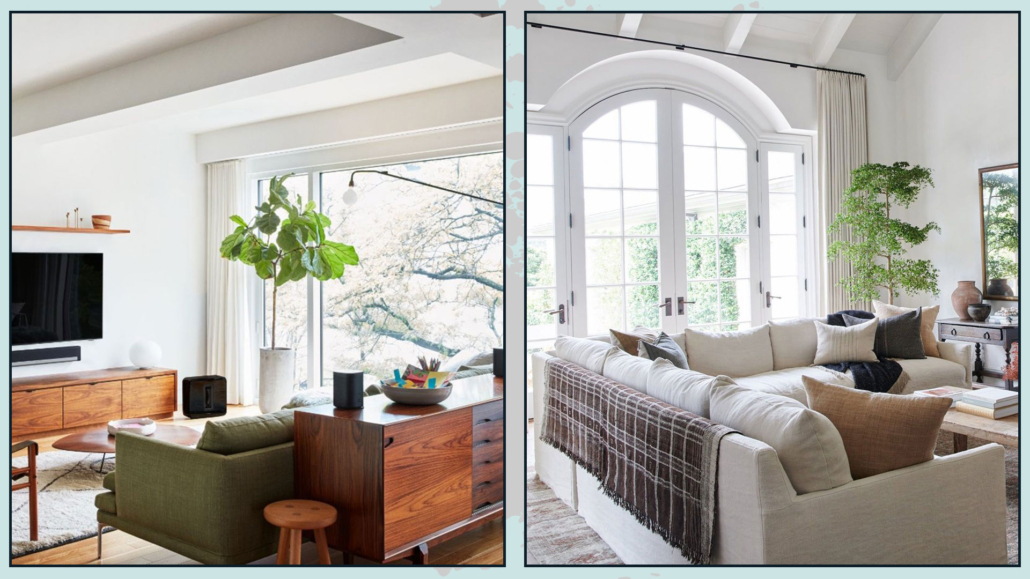
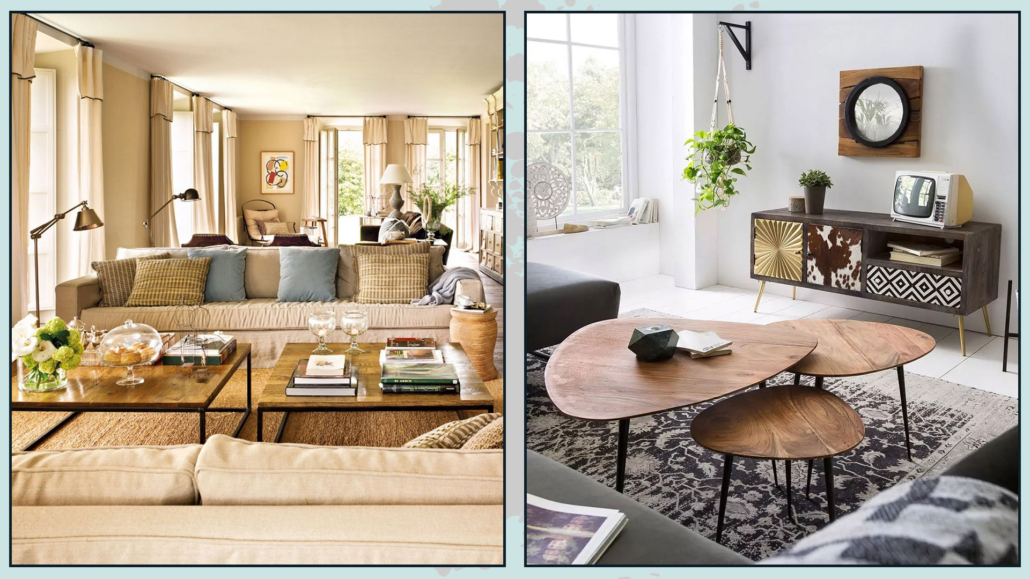
It’s better to avoid them by opting for furniture with light profiles, such as chairs and tables with thin legs.

Try to choose furnishing elements through which you can see the structure; this is a trick to deceive the mind: if you can see the space beyond a piece of furniture or an accessory, it will seem like the environment is larger!

Additionally, lighter furnishings will make the environment feel more airy, elegant, and, therefore, more pleasant!

So, NO to bulky, heavy, and dark furniture, and YES to ones with light, open, and bright structures!

(credits: moebel.ladendirekt.de; lago.it)

(credits: Room & Board; hackrea.com)

2 – SMALL RUGS

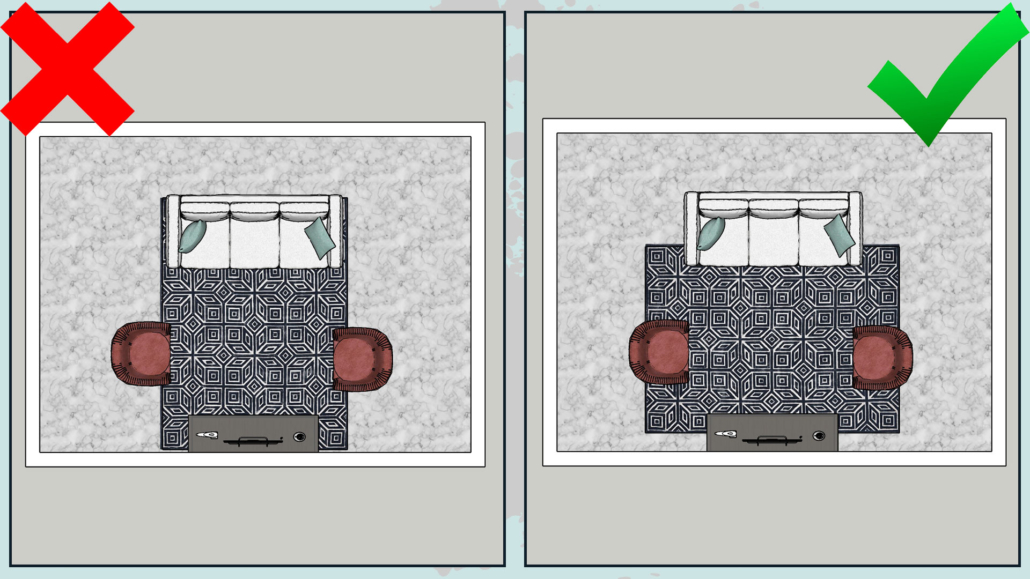
Another general common mistake is opting for a small rug; this never works well, not even in a large house, but it becomes detrimental in a small one.

A small rug will give the impression of a smaller space because it creates boundaries.

That will cause the mind to be somehow drawn to those boundaries, separating the part of the rug from everything else.

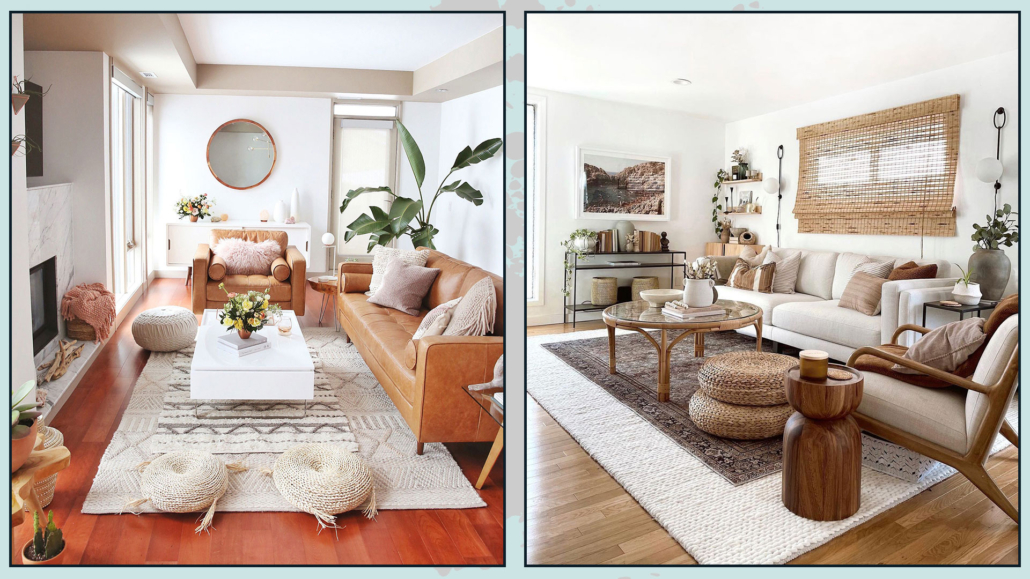
The rug should be large enough to enclose, contain the furnishings, or at least be under the front legs of the furniture.

That will show fewer edges of the rug and, consequently, fewer boundaries!

So, NO to small rugs (it’s better not to have them at all); YES to large rugs that go under the furniture!

(credits: rugsusa.com; Margaret Boatner)

3 – DIFFERENT AND CONTRASTING FLOORING

Having different floors with strongly contrasting colors is another classic mistake.

Contrast is a fundamental element in interior design, but it must be used wisely!

Different and contrasting floors are great when you need to visually divide an ample space containing two functionalities, such, for example, as an open-plan area with a kitchen and living room.

But in a small space, it’s somewhat similar to the principle we just discussed with rugs: different floors with different and contrasting colors create boundaries and visually shrink the space.

When space is limited, uniformity is crucial, so if you want to use two different floors, choose ones with the same tone.

The transition from one floor to another will be subtle, making the various zones feel like a single, larger space!

For this reason, where there are rugs, it would be ideal for them, besides being large, to have the same tones as the floor.

You’ll notice the different textures, but you won’t see barriers that sharply divide the space into diverse areas!

So, NO to great contrasts on floors, YES to uniformity; it’s okay to change textures, but try to maintain the same tones as much as possible!

(credits: progressprofiles.com; materiesuperficiarredo.it)

4 – FAILURE TO PLAN THE SPACE

Not planning the spaces when furnishing is a common mistake, but it becomes particularly noticeable when space is limited!

It’s crucial to make, in small environments, the most of the space according to your lifestyle.

So, every time you want to buy something, ask yourself:

– How do you use that space?

– Who lives there?

– What are your real needs?

That is essential to buy only what is necessary to make your spaces functional and efficient.

Let me give you an example: if two people live in a small house, there’s no need to get a 3-seater sofa or a sectional; a comfortable 2-seater sofa will suffice, along with maybe some extra seating that can be used near the table when you have guests!

Of course, you’ll need to ensure that all elements harmonize with each other for stunning spaces!

Multifunctional elements are essential for furnishing a small house:

– As in the previous example, a seating option that can serve as a relaxation spot near the sofa but also be used as a chair near the dining table when needed.

– A coffee table that transforms into a dining table;

– A pouf that doubles as a coffee table or storage unit;

These elements allow you to need fewer items and have more free space!

So, NO to furniture chosen just because you like it, YES to planning the spaces according to your needs.

(credits: graziademonte.com; instagram.comp60U_nKM-AFtaken-by=jackieruedaphotography)

5 – USING ONLY FLOOR SPACE

Yet another common mistake is using only the floor area, but the space is three-dimensional, and in small environments, we really need to take advantage of every available surface.

So, walls, but also ceilings where possible!

Think vertically, perhaps with shelves or wall-mounted furniture as storage space; in the kitchen, you could consider attaching a fold-down table instead of a traditional one.

Use wall lights instead of floor lamps: you’ll properly illuminate while leaving more floor space.

Of course, pendant lights, but you can also consider hanging a seat from the ceiling or lowering it to create additional storage space if the height allows it!

Even plants, instead of placing them on the floor, you could consider hanging them.

Thinking vertically will allow you to have everything you like and desire in your home without cluttering the floor and enabling better use of space.

You’ll thus have a functional home for your lifestyle, but also beautiful and, above all, comfortable!

So, NO to everything resting on the floor, YES to unleashing your creativity by making the most of every available surface!

(credit: carousell.sgpbohemian; elle.se Johanna-bradford)

I hope this article about furnishing a small house has been helpful and enjoyable for you. If so, let me know in the comments!

If you’d like, here are some more small tricks to make the most out of living in a small apartment!

Feel free to share it with anyone you think might be interested, I would be honored, and it will help me gain more exposure.

If you feel that your home, or any specific area of it, doesn’t reflect your personality enough, don’t wait any longer and book your consultancy!
How to create a color palette for your home?

The topic of color is absolutely fascinating and quite beloved.

I often get questions about which colors to choose for your homes!

Knowing how to choose and manage colors isn’t easy, but it’s vital for creating harmonious environments that truly represent us.

Designing and choosing the colors and materials that will be present in your home is truly important to ensure that the various spaces communicate with each other in a coherent and balanced manner.

The color palette is really one of the first things to start with!

As we now know, colors create mood and evoke sensations and emotions, so choosing them carefully and consciously is paramount!

Therefore, let’s see the fundamental steps to create a color palette that suits you, your tastes, and your style!

– CONSIDER THE FUNCTION OF THE ROOM AND COLOR PSYCHOLOGY

Different colors evoke diverse sensations, such as excitement, relaxation, introspection, mystery, passion, etc. (I talk about the color psychology here)

Color can transform a space:

– making it seem warmer or cooler.

– visually expanding the room.

– enhancing the sense of well-being.

– brightening up the space.

Color is indeed the fundamental tool for creating the right atmosphere!

(different colors different atmosphere! Credits: mooielight.com; Sean Litchfield)

To choose a color, you need to ask yourself a few questions:

– What is the function and purpose of that room?

– What emotions do you want to experience in that space?

– Which color can help you achieve this goal?

The answers to these questions will help you find the right color!

This color will impact sensations and behavior, making the space functional and suitable for the specific activities of that environment.

PAY ATTENTION ALSO TO THIS…

There are other, somewhat more technical aspects to consider:

– Where is the room located?

– How many windows are there, and how are they oriented?

– Is there anything that could alter the perception of color in any way?

These questions give an idea of the room’s conditions and further aid in color selection (or at least in determining its brightness and saturation!).

Let me give you an example: if a room doesn’t receive direct light, it’s better to use light colors to bring the space more breathing room and allow the indirect light to reflect more.

That will still enable you to make natural light more efficient, as it reflects better on lighter colors!

– CHOOSE NEUTRAL COLORS

Neutral colors are essential in a color palette because they serve as a backdrop and can enhance various furniture elements.

Walls painted in neutral colors open up numerous opportunities; they allow us to incorporate furniture pieces with stronger colors without overwhelming the space.

When selecting the right neutral, the first thing to do is to determine whether to choose warm or cool neutrals.

(Warm or cool neutral give a different result! Credits: cocolapinedesign.com; H&M)

Opt for those that best represent your personality and style and complement the other colors in the palette and furnishings.

Choosing a warm or cool neutral may not be simple due to its undertone.

For example, you might choose a white color, but once the wall is painted, it may appear slightly yellowish or bluish.

That occurs due to the undertone.

Except for pure neutrals like white, black, and gray, all others are obtained by combining two complementary colors or adding a pure neutral to one color.

That results in a white, for instance, appearing pure, but ultimately, due to its undertone, it may indeed have a slight yellowish or bluish tint.

I discuss this aspect of neutrals in more detail here!

– CHOOSE AN ACCENT COLOR

Accent colors are crucial for creating movement and contrast and emphasizing significant elements of the environment.

Choosing neutral colors will facilitate the choice of an accent color, which doesn’t necessarily have to be vibrant but should contrast with the other colors.

To better understand, if you had a home with a palette of soft neutral colors and added a bit of dark gray or black, that would still be considered an accent color because the contrast between light neutrals and dark gray or black is high.

(Credits: leclairdecor.com)

If, however, you want to add a touch of a “real” color, the questions we asked at the beginning will be helpful.

For example, green could be the right solution if you have a living room where you want to convey a sense of calm, relaxation, and freshness!

(Credits H&M)

If you decide to have more than one accent color, you need to know how to pair them, and for this, it’s essential to understand color theory and use the color wheel!

How??? Well, I explain it here.

LOOK AT THIS

There’s a small detail to pay attention to when choosing one or more accent colors: it should be accurately distributed throughout the space.

Let me explain further: suppose you choose the color green; you should use it, for example, on a seating piece, in fabrics like cushions, rugs, curtains, objects, and artworks.

You can even paint a wall or a portion of it if you like!

(Credit: interior by @interiors_dd)

In short, it shouldn’t be a single point of color that otherwise would seem randomly placed!

Doing this will help you create rhythm, one of the six basic concepts of interior design (I discuss it here), and make everything cohesive and harmonious.

That’s good: now you’re ready to create your color palette and bring it into your home!

– 3 SMALL CONSIDERATIONS

To avoid massive upheavals when using colors that you like on paper, follow these three little cautions:

  • Start with one wall or room:

You never know, so begin with a small portion to be sure you like the colors!

  • Test the shades:

unfortunately, a color swatch is NOT enough to understand how a particular color looks in your home, nor is seeing it in the store.

Where possible, get small samples and try them on the walls.

You’ll also see how they adapt to your spaces and the natural and artificial light you have.

Light can change the perception of colors.

  • Choose where to use the color:

It’s not a trivial choice; light colors enlarge, while dark ones shrink, so using color in one place rather than another can change the perception of spaces!

If you use different colors in various rooms, consider how they communicate with each other; if you can see the dining room from the kitchen and decide to use two different colors, make sure they harmonize.

(Credits: Sherwin Williams)

My suggestion is to use a single palette for the entire house, with the only exception being children’s rooms, and if necessary, use more than one color in one room and another in another.

That creates harmony and cohesion.

I hope this article about bedroom color combinations has been helpful and enjoyable for you.

If so, let me know in the comments!

Feel free to share it with anyone you think might be interested, I would be honored, and it will help me gain more exposure.

If you feel that your home, or any specific area of it, doesn’t reflect your personality enough, don’t wait any longer and book your consultancy!
How to choose neutral colors for home environments?

Neutral colors are widely used in interior design because of their versatility, providing a perfect backdrop for furnishings and architectural forms.

They help infuse elegance into spaces and evoke a sense of calm.

However, it’s easy to say ‘neutral colors,’ yet there are important factors to understand and consider when choosing the right color for your home.

Let’s explore them together.

WHAT ARE NEUTRALS?

Firstly, it’s essential to understand what colors we define as neutrals! Essentially, neutrals are colors that lack a high chromatic intensity; they have low brightness and saturation.

Neutrals fall into two categories:

– pure neutrals, which are white, gray, and black.

– near neutrals, achieved by mixing a color with a pure neutral or blending two complementary colors.

For example, if you take a blue and add white, at a certain point, it will lose saturation until it becomes almost white, with a hint of blue undertone!

That created white effectively becomes a neutral color but differs from pure neutrals due to its undertone.

1 – PAY ATTENTION TO THE UNDERTONE

The undertone is what sets near neutrals apart and is the reason why choosing them isn’t as straightforward.

It’s also why the result on the wall often differs from what we expected.

Due to this undertone, neutrals, even if they appear colorless, actually have them:

A white, for instance, unless it is a pure one, could have a slightly yellow or blue undertone.

That changes the perception of the space; a white with a yellow undertone will feel warmer than one with a blue undertone!

So, it becomes crucial to identify their undertone to be able to choose the right neutral colors!

Recognizing this elusive undertone isn’t immediate, but there’s a trick to uncover it: comparing the near-neutral with a pure neutral.

Essentially, you should place the color sample on a sheet of pure neutral paper, and the undertone will become immediately straightforward!

If you take a white by itself, it might seem just white, but when compared to pure white, you’ll immediately notice the undertone it tends toward!

The same applies to grays and blacks!

2 – WARM AND COLD NEUTRALS

Due to their undertones, near neutrals are further divided into warm and cold neutrals.

Warm and cold when choosing a neutral color are another crucial element to consider!

Knowing the undertone of a particular neutral makes it easy to position it on the color wheel and understand if it falls in the half of cold or warm colors.

From this, it’s evident that neutrals with blue, purple, and green undertones will be cold, while those with red, yellow, and orange undertones will be warm.

fotooooooooooooo

Choosing the correct “temperature” of neutral is paramount because it serves as the background and foundation for your spaces, style, and the emotions you want to evoke.

It’s also the starting point for creating your color palette.

Colors need to harmonize with each other to create cohesive and unified environments.

So, by knowing the undertone of the neutral you choose, then you can pair it with other colors following one of the six ways to combine colors on the color wheel (discussed here).

3 – PAY ATTENTION TO LIGHT:

The type of light in a room is a crucial element because it alters our perception of colors.

Direct natural light differs from indirect natural light and, of course, artificial light.

Artificial light, as we’ve seen on other occasions, changes depending on the color temperature of the bulbs, which can be warm, neutral, or cold.

For instance, a wall painted in pure white may appear slightly yellow with warm light and blue with a cold one!

To maintain the perception of the actual colors, it’s ideal for the ambient light, the general one, to be neutral (more on color temperature and lighting here).

For these reasons, it’s advisable to conduct tests and paint a portion of all the walls, observing their appearance throughout the day with both light, natural and artificial.

Also, look out for the various elements in the room and how they reflect light because this reflection will also change the color perception.

4 – STYLE AND ATMOSPHERE

Knowing what style and atmosphere you want to create in a specific environment is another crucial element in choosing the right neutral color for you.

Warm neutrals are generally the right choice if you want to give an inviting, cozy, and comfortable feel.

(credits H&M HOME)

Cold neutrals are more suitable if you prefer something more sophisticated and relaxed.

(credits cocolapinedesign.com)

For a minimalist style, pure neutrals are ideal.

(credits rikreainteriors.it)

In recap, when choosing a neutral color, you need to:

– decide whether to go for pure neutrals or near neutrals.

– if you choose near neutrals, understand their undertone.

– choose between warm and cold neutrals to best match them with the color wheel and the rules of color theory.

– finally, pay attention to the light and how it may alter the perception of colors.

I hope this article has been helpful and enjoyable for you. If so, let me know in the comments!

Feel free to share it with anyone you think might be interested, I would be honored, and it will help me gain more exposure.

If you feel that your home, or any specific area of it, doesn’t reflect your personality enough, don’t wait any longer and book your consultancy!
Today, by request, I’m addressing those who have children and, therefore, need to know how to furnish a kids’ room…

Designing a space for children and/or teenagers requires special attention: you need to create an environment that is functional, safe, and comfortable but also capable of evolving with them over time.

At each stage of a child’s or teenager’s development, there are specific needs that you should consider when furnishing their room.

– THINK AHEAD

To avoid completely redoing the room every so often, consider purchasing some elements from the beginning with their future needs in mind.

For example, the wardrobe—while there are many delightful baby and children’s furniture options, after a few years, you’ll have to replace them.

The changing table, which is essential in the beginning, could actually be a beautiful dresser with just the changing pad on top.

The changing pad may disappear, but the dresser will remain.

To create a child’s room atmosphere that can easily transition into a teenager’s space, use colors, textiles, and decorations.

These elements have a less significant financial impact when they need to be updated.

(credits: stylefurnituremalta.com; Dasha Dmitrieva)

– START WITH THE BIG ITEMS

It might sound trivial to you, but the risk is not achieving a functional room otherwise: bed, wardrobe, and desk are the three essentials in a kids’ room, and everything else follows from there.

Of course, the desk will come later, and the bed will need to be replaced initially with a crib, but you should have a clear idea of how and where to place these three items.

Once you’ve established the optimal placement for these three items, you can decide whether to add more, like a bookshelf, a pouf, or a chair…

(credits: stylefurnituremalta.com; addamoebel.de)

– DIVIDE INTO ZONES

There are 4 zones to consider: sleep, play, study, and storage.

Kids tend to use everything as a play area, so if you don’t visually separate the zones, the risk is that the entire room becomes chaotic.

Bookshelves and storage should be placed near the desk and ideally away from the bed.

In smaller rooms where physical separation into zones is challenging, you’ll need to utilize the walls and multifunctional or fold-away furniture.

(credits: arentpyke.com; sneakerschampion.top)

In previous articles, I’ve often mentioned that furniture doesn’t need to be against the walls, but children’s and teenagers’ rooms are the exception.

It’s a great idea to leave them plenty of free space.

– INCORPORATE THEIR PASSIONS

Encourage your children to pursue hobbies and passions and use them to decorate their rooms.

Of course, avoid creating a room entirely based on a single theme because if their interests change, you’d have to redo everything. However, having a wall or a dedicated corner for that specific hobby or passion can be a unique addition.

The room will reflect your child’s personality and make them feel frankly represented.

(credits: Franklin Pérez; Capturing Joy with Kristen Duke)

– DON’T OVERDO IT WITH COLORS

Rooms with walls, furniture, and accessories in overly bright colors are unsuitable.

Too much can be overwhelming, and there’s a risk that they may come to dislike a color as they grow up because they are sick of being surrounded by it!

So, it’s GOOD to have color, but perhaps in softer tones on walls and large furniture, and then brighter in accessories and decorations!

(credits: stylesatlife.com; vivense.com)

– COLORED WALLS

I mentioned not to overdo the color earlier, but that doesn’t mean keeping all the walls white!

That would be a waste and a bit impersonal!

It’s acceptable ONLY if there are many colorful furnishings and decorations.

However, as mentioned before, I advise against this.

It’s better to use softer colors even for the furniture!

(credits: repubblica.it; ruangdekorasi.com)

You can also use wallpaper, looking for one with colors and patterns that help create the atmosphere you want for the room.

You can even do something unusual by putting wallpaper on the ceiling instead of the walls!

(credits: Cristina Peralta; purejoyhome.com)

Of course, if your child is already older, you can share with them what feelings they want to experience in their room and what represents them the most.

But since the tastes of children and teenagers change quickly, be careful not to overdo the patterns, or you’ll find yourself redoing the walls frequently!

– CHOOSE MATERIALS WISELY

For furniture you plan to use for a longer time, such as the wardrobe or the bed, it’s important to choose durable materials.

Of course, avoid fragile materials, especially when they are younger!

When I talk about materials, I also mean the floors because, believe me, they’ll be on the floor quite often, especially when they are babies, but even after that.

Avoid marble or overly smooth surfaces: they can be slippery besides being cold!

Wood would be ideal because it’s a warm material. But if you prefer tiles, remember to put on a nice rug!

(credits: diotti.com; brandanidecore.com)

But even for the rug, BE CAREFUL that they are resistant and easy to clean!

– CURTAINS

Even in children’s and teenagers’ rooms, light and privacy control are essential, so curtains are necessary!

Moreover, when kids are younger, it’s essential to darken the room well so they can rest better.

For this reason, you can use double curtains: a light, semi-transparent drape and a darkening, colorful one.

The light curtain can be in drapery style for a more classic and romantic room or in a panel (or glass panel) for a more modern and contemporary one (here I talk about how to choose curtains).

The darkening colorful curtain should be chosen to match the room’s colors and mood, of course.

(credits: mydomaine.com; oceanhomemag.com)

– LIGHT IT UP PROPERLY

We know lighting is super important everywhere, and it’s no different in a children’s or teenagers’ room.

One should plan for general room lighting and specific lighting for each activity:

– a floor lamp for playtime;

– one desk lamp for the study area (which should be positioned to make the most of natural light);

– a bedside lamp.

Instead of the classic table lamps that kids might accidentally knock over, you can consider using wall-mounted lights!

There are various types available, and they can add a lively touch to the room!

(credits: sigmamasterpiece.com; stylefurnituremalta.com)

– SEPARATE  FROM THE REST OF THE HOUSE

I’ve always said that there should be a common theme in every room in the house, such as color or style, but the kids’ room can be an exception!

The room is theirs and should represent them.

So, don’t impose your taste or style on them!

At the same time, you can’t accommodate every single request they have, as mentioned earlier, their ideas change quickly, and you’d find yourself constantly redecorating.

So, compromise on their requests for colors and major furnishings and let them get creative with minor elements like textiles.

(credits: amazon.com; houseandhome.com)

I hope you found this article helpful and enjoyable. If you did, please let me know in the comments!

Feel free to share it with anyone you think might be interested; I would be honored, and it will help me get noticed.

If you feel that your home or any part of it doesn’t reflect you enough, don’t wait any longer and book your consultancy!
Do you have the luxury of having a basement? If you have doubts about how to furnish this space, this article might be just for you!

The basement is an absolutely fascinating space.

Not everyone is lucky enough to have one, but for those who own this room, there are numerous ways to utilize and furnish it.

Let’s explore them together!

– DINING AREA

That is perhaps one of the most common ways to furnish a basement. The basement is often transformed into a dining area to avoid making a mess in the main living space and to enjoy mealtime more informally.

If you want to set up your basement as a dining area, it’s essential to have a kitchenette.

That is much more practical as it saves you the hassle of going up and down to carry dishes.

It doesn’t need to be as extensive as the kitchen in your main living area, but it should have all the essential elements for heating and serving food, in addition to a refrigerator.

Naturally, you’ll need a reasonably large table to accommodate everyone, and you can use benches or chairs as seating.

(credits: freshpalace.com; cose di casa)

Try to avoid stools if possible, as they can be quite uncomfortable.

It’s okay to keep things informal, but stools are not the most comfortable choice.

If you have enough space, you might also consider creating a conversation area with some armchairs for post-meal relaxation.

That is even more appealing if you’re fortunate enough to have a fireplace!

PAY ATTENTION TO THE LIGHTING

When it comes to lighting, you’re likely to have limited natural light, so remember to illuminate the space effectively:

– use ambient, soft lighting to ensure the entire area is well-lit;

– install dedicated task lighting for the kitchen, to properly illuminate the workspace;

– place lighting over the dining table so that the food and setting are always well-illuminated.

(I talk about lighting here)

As for the style that works best in a basement, it depends on the architecture and your personal preferences.

The beauty of a basement is that it’s a distinct space from the rest of the house, so you’re not constrained to match the style of the main living areas.

Exposed brick can give a more rustic or industrial vibe, while plastered walls and ceilings offer a blank canvas for you to choose the style you prefer!

– WINE CELLAR WITH A BAR AREA

If you’re a wine enthusiast, you can transform your basement into a marvelous wine cellar.

Displaying your wine collection can be a work of art, and if you also enjoy making cocktails, it’s a great idea to pair the wine cellar with a bar area!

You can set up a lovely bar counter with a selection of glasses and other liquor bottles.

This way, you can treat your friends and family to your fantastic aperitifs or host wine tastings.

(credits: kwdesigns.com; weheartit.com)

If space allows, consider creating a conversation area for a more relaxed wine-tasting experience.

Just like in the dining area, it’s essential to have both general ambient and specific task lighting for the bar.

As for the wine cellar area, it might require specialized lighting, but if you’re a wine connoisseur, you probably know more about that than I do!

– READING AREA

If you are fond of books, I’m sure you never seem to have enough space for them, and you particularly enjoy alienating yourself a bit when you want to read.

Your basement could actually become your sanctuary!

You can fill it with bookshelves and create a cozy sitting area where you can immerse yourself in your reading.

(credits: studiovert.com; overstock.com)

There are plenty of solutions available in the market for creating your library, with various materials to choose from.

Just find the most functional for the space and your needs.

A couple of armchairs or a small sofa will complete the reading nook.

You can also consider enhancing the space with a pretty stereo system for some background music to enjoy even more the reading experience!

That all depends on your preferences and the type of reader you are.

Once again, pay attention to lighting.

In addition to ambient lighting, make sure to have specific task lighting for reading near your seating area to avoid straining your eyes.

– HOME THEATER

You might have a deep passion for movies, documentaries, and TV series, so why not transform your basement into a home theater?

You’ll have the luxury of enjoying it without having to share the space with anyone but the people you love.

With proper soundproofing, you can install top-notch home theater equipment without disturbing anyone nearby.

(credits: ecstasymodels.tumblr.com; pinterest)

You can create a super modern home theater with a large TV screen mounted on the wall, or you can opt for a slightly more vintage setup with a high-quality projector and leave the wall smooth and white as a screen.

Find some comfortable reclining chairs, and then… enjoy the show!

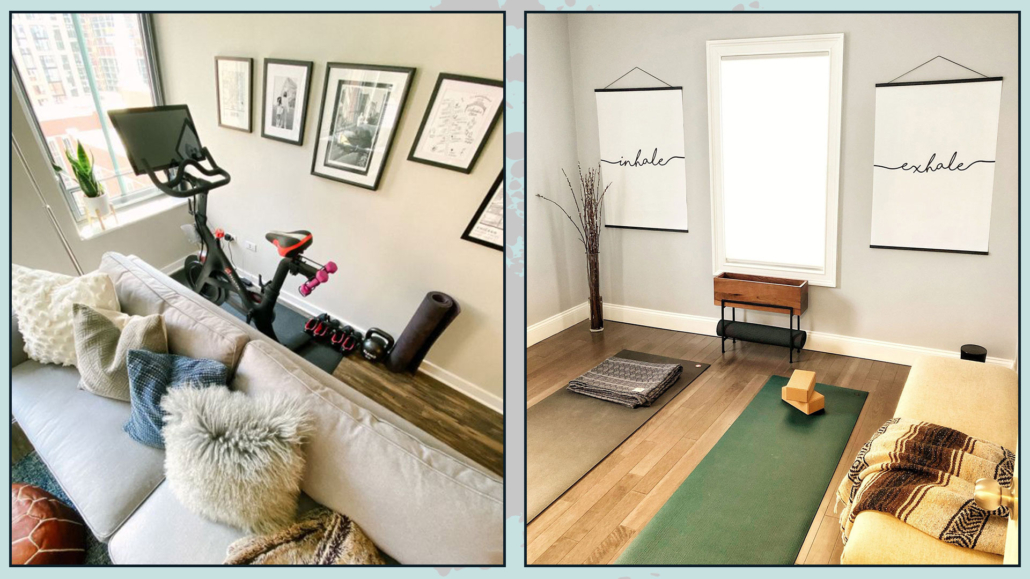
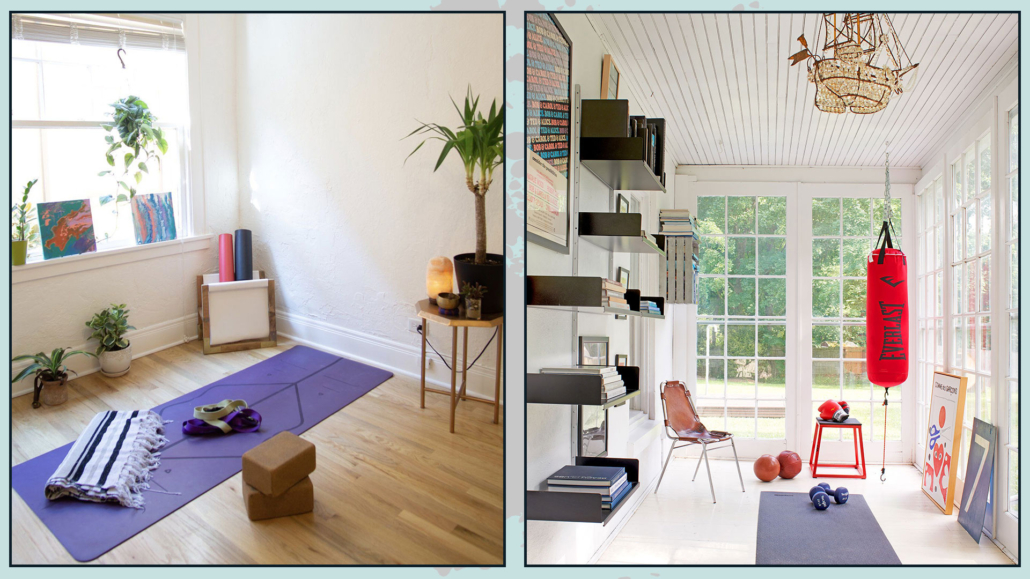
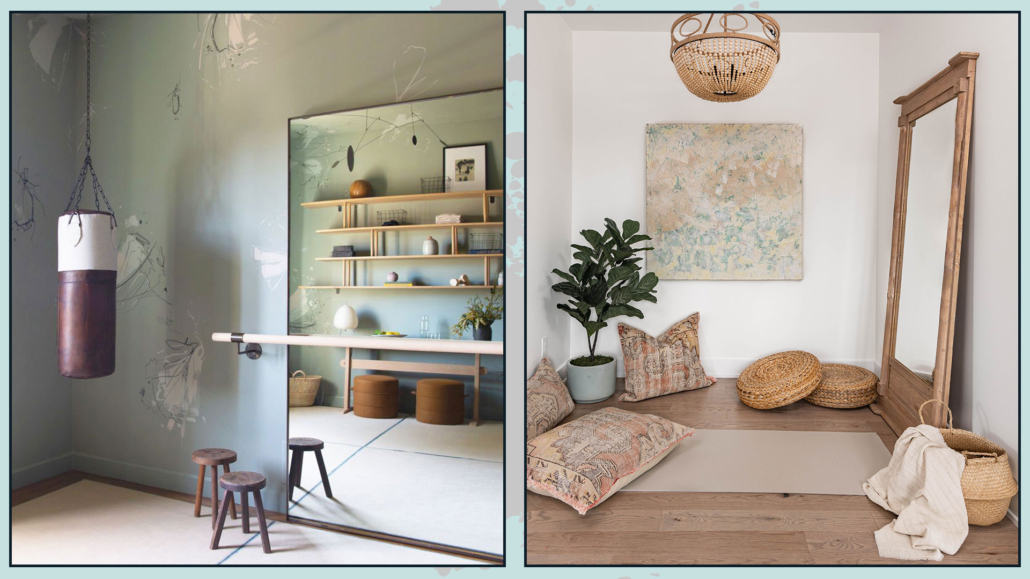
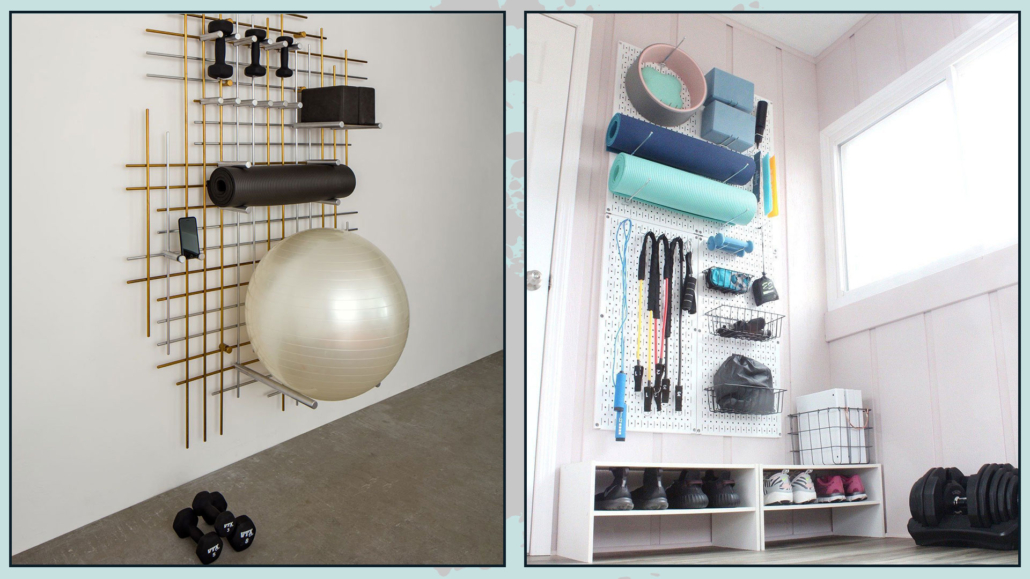
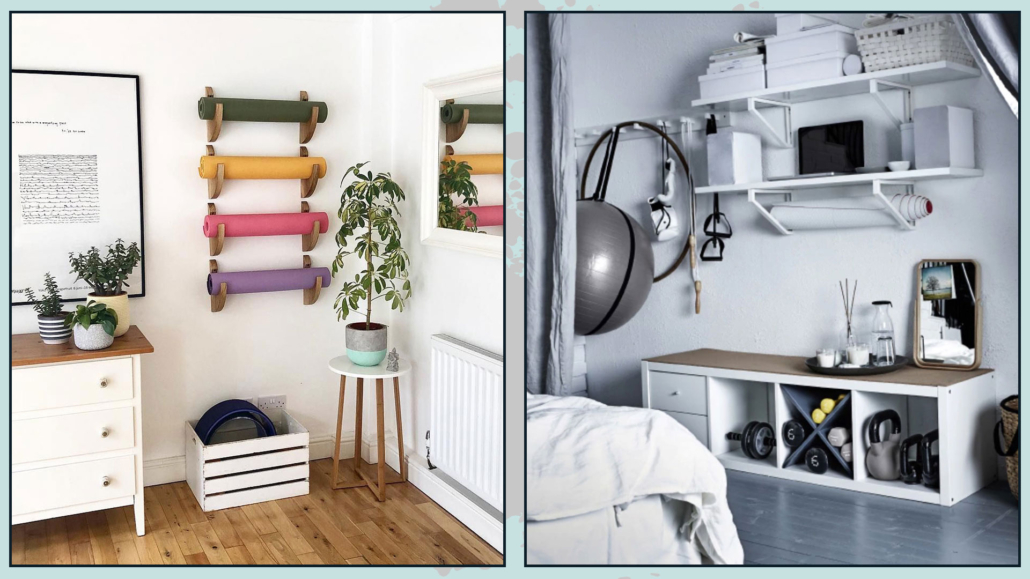
– HOME GYM

If you’re someone who loves staying in shape but doesn’t enjoy spending hours at the gym, you can always consider bringing the gym to your basement!

You can select the right exercise equipment and arrange the room to suit your workout routine.

(credits: pinterest)

It’s a practical option because you can use it whenever you want for as long as you like, eliminating the time wasted on commuting to a gym. Plus, when you’re done, you’re already at home!

– PLUS ONE

“What does ‘plus one’ mean?”

It means that you could also decide to combine multiple functions, such as having a dining area with a wine cellar and a bar or a gym and a reading nook…

That, of course, depends on the size of your basement.

In general, you could leave it as one huge open space for most combinations, perhaps visually dividing the various zones with colors, rugs, or furniture acting as “room dividers.”

If you’re combining two distinct functions, like a dining area and a gym, it’s a good idea to create separate, different zones to maintain a sense of order.

(credits: fbcremodel.com)

When you have two different functions in one space, the same design principles you use in your house apply:

– use a consistent color palette (as mentioned earlier, visually divide with different colors that are part of the same palette);

– maintain a cohesive style or a mix of styles that creates a harmonious feel across the different zones.

I hope you found this article helpful and enjoyable. If you did, please let me know in the comments!

Feel free to share it with anyone you think might be interested; I would be honored, and it will help me get noticed.

If you feel that your home or any part of it doesn’t reflect you enough, don’t wait any longer and book your consultancy!
Curtains are the blessing and bane of interior design, but how to choose the correct curtains?

First and foremost, you should think of curtains as fully-fledged decorative elements.

They must be functional, serve a specific purpose, and reflect your style.

Curtains filter light, provide privacy, dress up windows, add warmth to spaces, and introduce textures and, if desired, colors.

A home without curtains, except for exceptional views, can give the impression of an incomplete and even neglected space.

Choosing curtains should be done with care, much like the rest of your furnishings, as they can completely transform the look of a room.

If you’re unsure, you can make this choice in the second stage after your home is already furnished.

This approach allows you to get a better understanding of spaces and, most importantly, consider color and style coordination for perfect harmony!
Let’s have a look at the types of curtains to see how to choose them!
DRAPE CURTAINS

These are the classic curtains supported by a rod or a track.

They are the most versatile and can fit any window or French door.

Depending on the rod and fabric chosen, they can complement any style.

The thing that sets the style apart, in addition to the rod and fabric, is the type of drapery.

The richer the curtain’s draping, the more it suits a classic style, while minimal, understated drapery works well with a more modern and contemporary look.

(credits: Gaia Miacola Architetto)

YOU CAN REALLY INDULGE YOURSELF….

You can use them in a simple, standalone fashion, with more or less transparent panels for varying levels of privacy and light control, or combine them with other window treatments.

(credits: Katke Zavese; gotain.com)

You can choose to have a double drapery setup, with one, as mentioned earlier, being semi-transparent and the other blackout, which you can open or close as needed.

That is perfect, for example, in a bedroom.

Alternatively, instead of the blackout curtain, you can opt for colored fabrics to leave open at the sides to add a touch of color!

(credits: hackrea.com; pinterest)

Or you can also pair them with totally different curtains, such as panel or roller curtains (we’ll discuss these specifically later).

(credits: hoomebook.pl; YourSpaceForniture.com)

That can often be very practical:

For instance, if you have a French door that you frequently open and close, opening and closing the curtains could become annoying.

In such a case, you could install a simple panel curtain against the glass and keep the drapery curtains open at the sides.

At this point, you may decide to use particular and colorful fabrics to add an extra touch!

If you opt for this type of curtains, remember that one panel may be sufficient for a single-door window, while double-hung windows typically require two panels.

PAY ATTENTION TO THE MEASUREMENTS…

The width of the panels should be about 1.5 to 2 times the width of the window.

That is because curtains should extend beyond the window frame to cover a bit of the wall and, most importantly, have a soft, draped appearance.

Regarding the height (in order to avoid falling into one of the classic mistakes made when decorating), they should be installed at ceiling height or just below it, extending at least to the floor.

In areas with little passage, you can have them lean a little more for an added touch of elegance!

(credits: PianetaDesign.it; Lizzie Mackey)

For these curtains, there are numerous different support options available, such as rods, tracks, or even metal wires.

The choice, naturally, depends on the style you want to achieve!

Even among curtain rods, there is a wide variety: wood, steel, wrought iron, and more.

When selecting a rod, there are other significant accessories to consider, such as finials and, optionally, curtain catchers.

Again, much of this will depend on the style you’re aiming for.

Ornate finials and curtain catchers are better suited for a classic style, while more streamlined options are good for a modern and contemporary look.

ROLLER AND ROMAN CURTAINS

This type of window treatment is very sleek and fits perfectly with contemporary and modern styles.

These curtains gather the fabric at the top of the window, either with smooth panels or by rolling up, similar to outdoor shades.

Roman shades are more decorative because, when you raise them, they form equally spaced folds, creating a sense of movement.

(credits: Maria Nigro; mottura.com)

They can be made from simple semi-filtering fabric or feature colorful patterns and semi-darkening options.

Roller shades can also be dual, with one being semi-transparent and the other being blackout, adjustable independently.

They can even be made from bamboo, making them ideal for a beach home!

(credits: A1 blinds.co.uk; tau.com; blancohnosdecoraciones.com)

Both models can be large, covering the entire window as the drapery curtains.

In this case, you should install them close to the ceiling.

Alternatively, you can mount them at the window frame: more practical for opening and closing the window, but certainly less scenic!

If you opt for large shades that cover the entire window, remember that the shade should be wider than the window and extend a portion onto the wall, at least 15-20 cm on each side.

The window treatments applied directly to the glass work well, especially when paired with drapery curtains!

As for glass applications, there are straight panels or ones that can be gathered at the bottom using a magnet.

Glass applications are particularly suitable for small spaces, such as bathrooms and kitchens, where floor-length curtains may not be as practical.

(credits: TendaTappeti.com; tao.com)

However, if space allows, even in these rooms, you can opt for floor-length drapery curtains.

While it’s true that they may require more frequent cleaning, the dramatic visual impact they create is truly unique!

SLIDING PANEL CURTAINS

This type of curtain fits perfectly with a minimalistic style and is very convenient for huge windows.

They are simple panels, often with a weight bar at the bottom to keep them taut, and they slide horizontally on dedicated tracks (similar to sliding closet doors).

They are straightforward and easy to handle and can become quite decorative when you choose fabrics with patterns!

(credits: Lidia Siragusa; Valeria Bartolo)

One thing to keep in mind when selecting this type of curtain: it’s better to have, if possible, fewer panels that are wider rather than more narrow panels.

The wide panels can also visually expand the room!

Here, as with roller or Roman shades, the curtains should be larger than the window by at least 15-20 cm on each side!

HOW TO CHOOSE THE RIGHT CURTAINS?

The choice of one type over another should be based on the style and atmosphere you want to create in a space, and you can use each type of curtain in all areas of the house.

When it comes to curtains, try to maintain consistency by using the same type in all rooms to create a cohesive look.

Of course, you can choose to have double drapery in only one room and not throughout the house, but if you opt for drapery, make it drapery everywhere (with exceptions for bathrooms and kitchens), and if it’s roller shades, then go with roller shades anywhere.

In cases where you combine different curtain types, such as having Roman shades on the glass and drapery, you can skip the drapery everywhere else but keep the Roman shades consistent.

I hope this article on how to choose the right curtains has been helpful and enjoyable for you. If so, let me know in the comments!

Feel free to share it with anyone you think might be interested, I would be honored, and it will help me gain more exposure.

If you feel that your home, or any specific area of it, doesn’t reflect your personality enough, don’t wait any longer and book your consultancy!