There are many false myths circulating about Feng Shui; so if hearing about it sparks a mix of curiosity and skepticism, know that this is completely normal.
Feng Shui is an ancient, deep, and fascinating discipline.
And yet, in recent years, it has often been oversimplified, misinterpreted, and reshaped through a Western lens—reduced to a rigid list of rules or a collection of “magical” objects to place here and there.
The result?
A discipline that was born to help you feel better in your home ends up creating confusion, rigidity, or even anxiety.
In reality, Feng Shui is the study of places and people.
It’s a way of inhabiting space that is coherent with who we are.
In today’s article, I aim to bring clarity by guiding you through the most common Feng Shui myths, explaining why they don’t work—and, most importantly, what does work when it comes to creating spaces that support you, nourish you, and truly reflect who you are.
– Myth #1: Feng Shui is a rigid set of rules you must follow exactly
“You can’t do that.”
“That brings negative energy.”
“That’s always wrong.”
Unfortunately, these phrases are very common—and understandably make Feng Shui feel heavy, complicated, or even punitive.
They turn a tool for harmony into a test you feel you have to pass.
And they make people feel “wrong” for living in real homes, with real limits, compromises, and practical choices.
The truth is that Feng Shui is not a universal rulebook that applies to everyone in the same way.
It’s a method of observation and listening—and above all, it is deeply personalized.
Every home is different.
But even more importantly, every person is different, with their own energy, history, and life phase.
The same house will be arranged very differently depending on who lives there—even when using Feng Shui—because it’s not the walls that lead the way, but the person.
In this sense, I find a strong affinity with Reiki: energy flows where it’s needed, not where a manual says it “should” go.
Feng Shui helps you understand what’s happening in a space and how that space affects you.
It’s not about telling you what’s “wrong.”
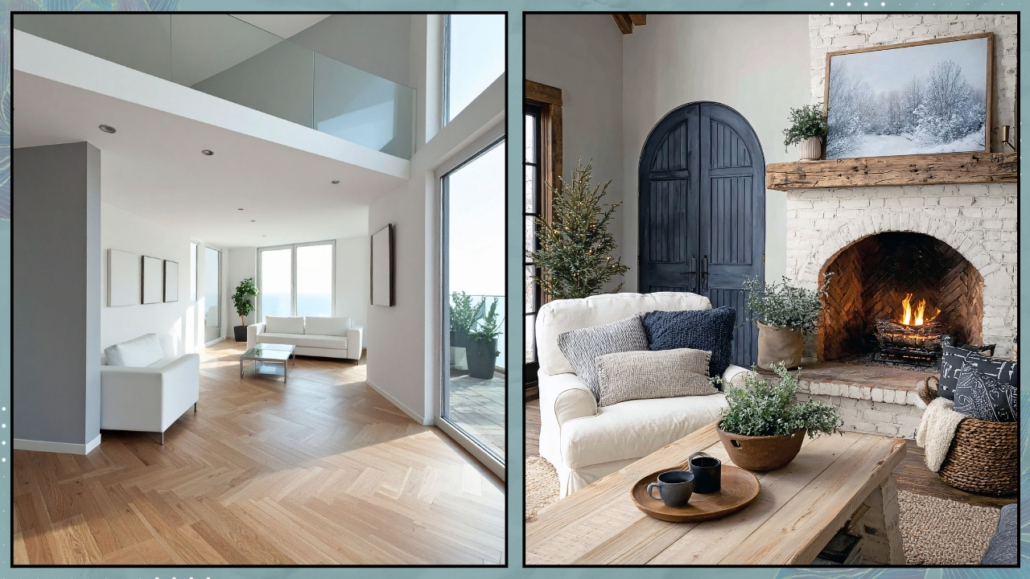
(credits Canva)
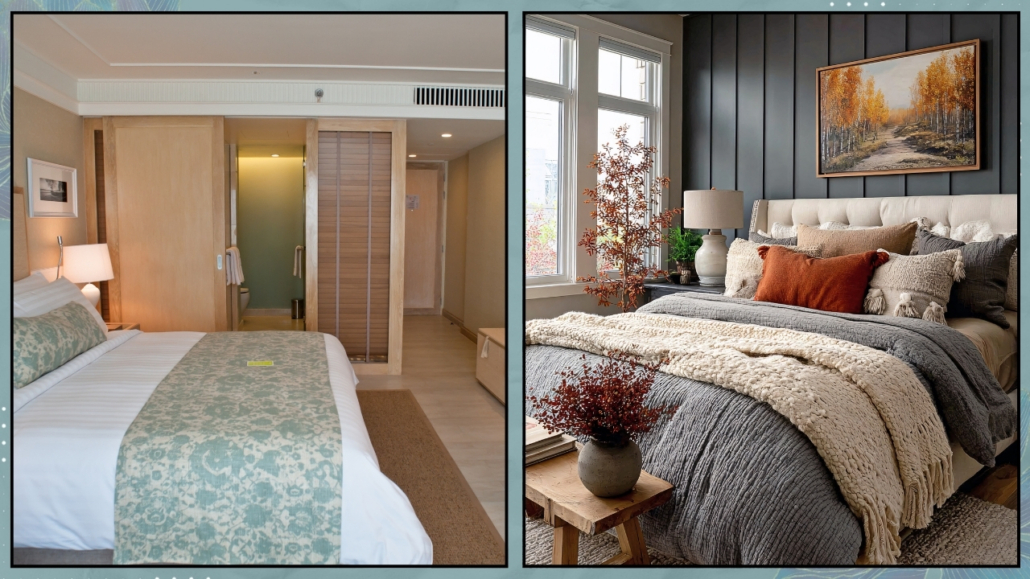
– Myth #2: If your bed isn’t perfectly oriented, you won’t sleep well
This myth often goes hand in hand with the idea that “the bed must have the headboard facing North,” and it’s one of the beliefs that creates the most anxiety.
As mentioned earlier, even the ideal position of a bed depends on the person and on how their energy interacts with the energy of the home.
The same person might have one ideal orientation in one house, and a completely different one in another.
Without going into technical details, this rule—when taken out of context—becomes an unnecessary dogma that ignores the reality of how we actually live.
Not every bedroom allows for the “ideal” position.
There are windows, doors, walls, small spaces, and practical needs to consider.
True Feng Shui is flexible.
It adapts to reality instead of forcing it.
What matters most is how you feel in that spot.
If you feel relaxed, protected, and comfortable, then it works—even if it’s not “perfect.”
And even when the only possible position creates some discomfort, know that there are many ways to harmonize the space using colors, materials, and objects.
(credits Canva)
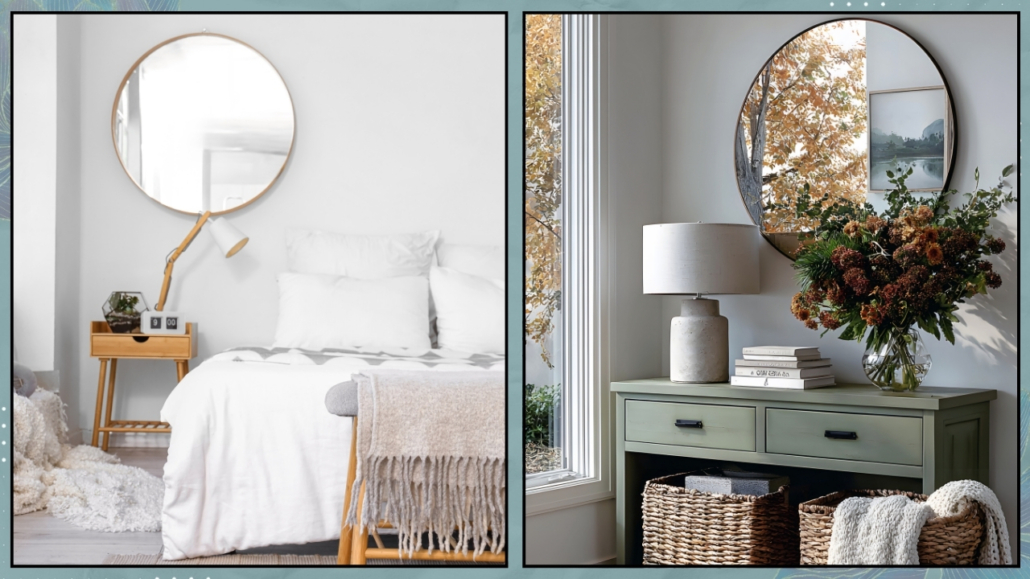
– Myth #3: Mirrors are almost always negative
“No mirrors in the entryway—and definitely none in the bedroom!”
I’ve heard this so many times.
Once again, without context, this idea becomes misleading.
In Feng Shui, mirrors don’t have a moral value.
They’re not “good” or “bad.”
Mirrors amplify what they reflect.
So the right question isn’t: Is the mirror okay or not?
It’s: What does it reflect? How does it make you feel?
Does it increase light and openness—or disturbance and confusion?
A mirror reflecting natural light or an orderly space can be a great ally.
One that makes you uncomfortable or reflects chaos isn’t right for that spot.
When it comes specifically to bedrooms and entryways, a few simple guidelines help:
- In the bedroom, mirrors are fine, but they shouldn’t reflect people while they sleep, as energy keeps bouncing back and forth and may disturb rest.
- In the entryway, a mirror shouldn’t face the door directly, or the energy will bounce back out instead of entering.
That said, in your bedroom, if you can’t change the mirror’s position and you sleep well anyway, there’s no problem.
If you don’t sleep well, you can always partially cover it so it doesn’t reflect you while lying down.
In the entryway, if there’s no alternative position, try not to open the door completely.
This way, energy enters at an angle and is reflected into the rest of the space.
(If you like, here I’m talking about an entryway with Feng Shui)
(credits Canva)
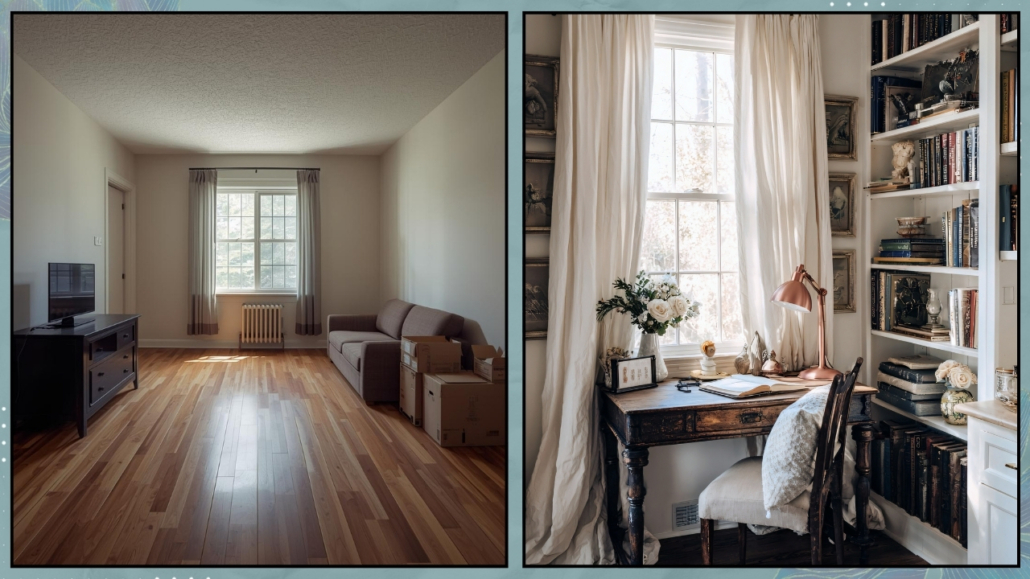
– Myth #4: If you can’t apply everything, then Feng Shui is useless
This myth is subtle but very common.
“If I can’t do it properly, then there’s no point in doing it at all.”
This mindset frames Feng Shui as something elitist—accessible only to those who can change everything.
In reality, Feng Shui works especially in small steps.
Sometimes it’s enough to change one thing: a color, the position of an element, a more conscious choice, or a different quality of attention to a space you use every day.
You don’t need to do everything at once.
What matters is starting.
(credits Canva)
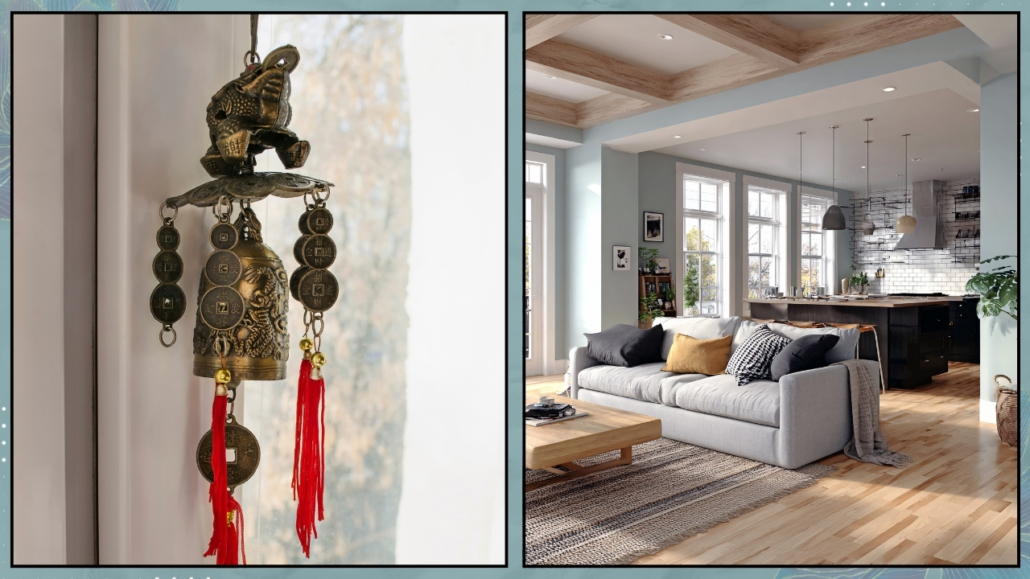
– Myth #5: Feng Shui is only symbolic or “spiritual”
When people think about Feng Shui, they often imagine symbolic objects placed around the house to attract luck or love.
But placing a golden turtle, a crystal, or some exotic symbol won’t magically bring abundance, love, or fortune.
Feng Shui is not magic, and it’s not superstition.
Objects can act as activators—but only within the right context.
You can place a Pachira aquatica (also known as the money tree), but it won’t help if your home is cluttered, doesn’t reflect who you are, and doesn’t allow you to recharge your energy.
Feng Shui works first and foremost with very practical elements:
- light
- furniture layout
- order
- movement flow
- spatial perception
It’s deeply connected to interior design and to how the body and mind respond to environments.
The symbolic layer, when present, comes later—to amplify intention—only after the space has been cleared and allowed to breathe.
(credits Canva)
– Myth #6: Feng Shui is just about aesthetics
This myth is closely related to the previous point: many people believe that Feng Shui is an Eastern interior design.
And yes, aesthetics matter.
Beauty is energy, and a harmonious environment feels welcoming and warm.
But Feng Shui goes beyond the surface.
It’s about how you feel when you enter a room.
About your breath, your vitality, your ability to rest, create, and love.
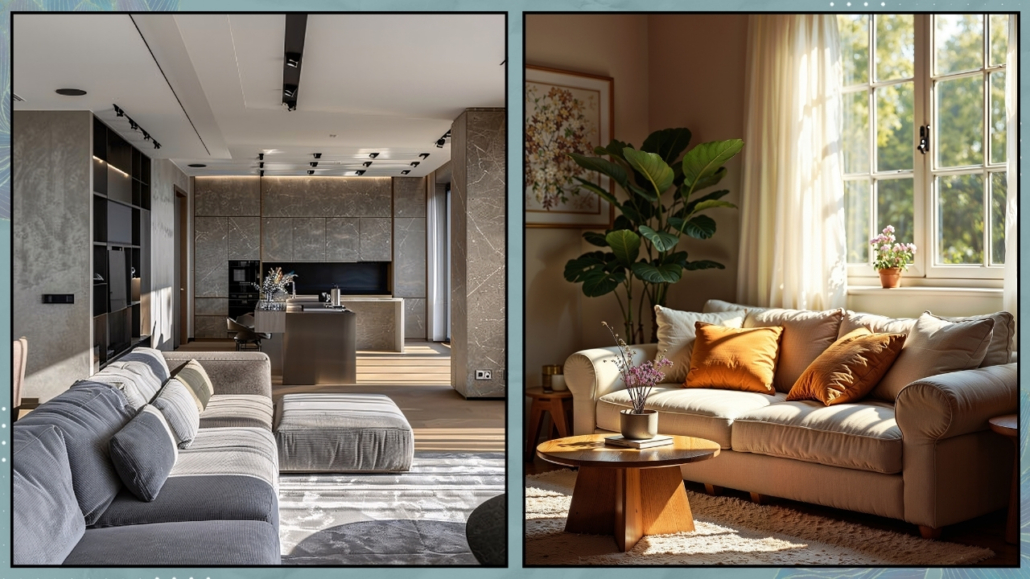
Be mindful of “magazine-perfect” rooms: they may be beautiful, but energetically useless if they don’t make you feel good.
Feng Shui doesn’t stop at what you see—it goes deeper, into what you perceive.
That’s why you don’t need a perfect home.
You need a lived-in home—one that’s listened to, observed with fresh eyes, and felt with the heart.
(credits Canva)
– Myth #7: You only need to apply the Bagua you find online
The Bagua is an octagonal energy map where each section represents an area of life: prosperity, recognition, love, creativity, leadership, life purpose, rest, and roots.
When placed over a floor plan—or even just a room—it helps assess balance, support weaker areas, soften overly strong ones, and strengthen what you need most in a specific life phase.
For this reason, the Bagua is a powerful tool—but also one of the most misunderstood and oversimplified.
Many websites offer simplified versions disconnected from traditional practice, leading people to apply generic maps to their homes.
There are also key factors to consider when placing the Bagua correctly, such as the actual entrance and the energetic center of the home, which isn’t always obvious.
Ignoring these aspects can activate the wrong areas altogether.
It’s a bit like trying to navigate a city using a map of a different city.
It simply doesn’t work.
(credits Canva)
– Myth #8: Feng Shui is just a trend
With the growing popularity of Eastern practices in the West, Feng Shui people often treat Feng Shui as a mere trend.
This mindset reduces a millennia-old body of knowledge to a decorative or fashionable phenomenon.
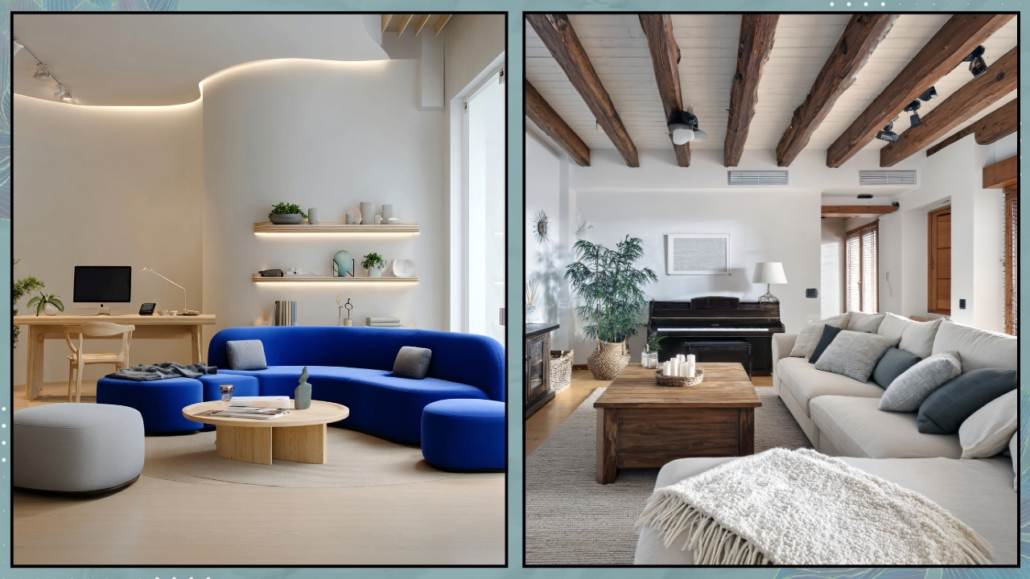
The truth is that Feng Shui is over 5,000 years old.
It has survived because it works—it supports life, energy, and our relationship with space.
It’s not magical.
It’s deeply human.
Yes, it developed within a different culture and building tradition, but with the right awareness, we can apply it to our homes as well.
(credits Canva)
– What Really Works in Feng Shui
- Awareness: observing how you live in your spaces
- Qi flow: creating movement, openness, and breath
- Intention: bringing presence to your choices
- Harmony between you and your home: there is no Feng Shui without listening
- Energetic connection: as in Reiki, energy follows your vibration
Feng Shui isn’t a set of rules.
It’s a journey.
A way of coming home—inside and out.
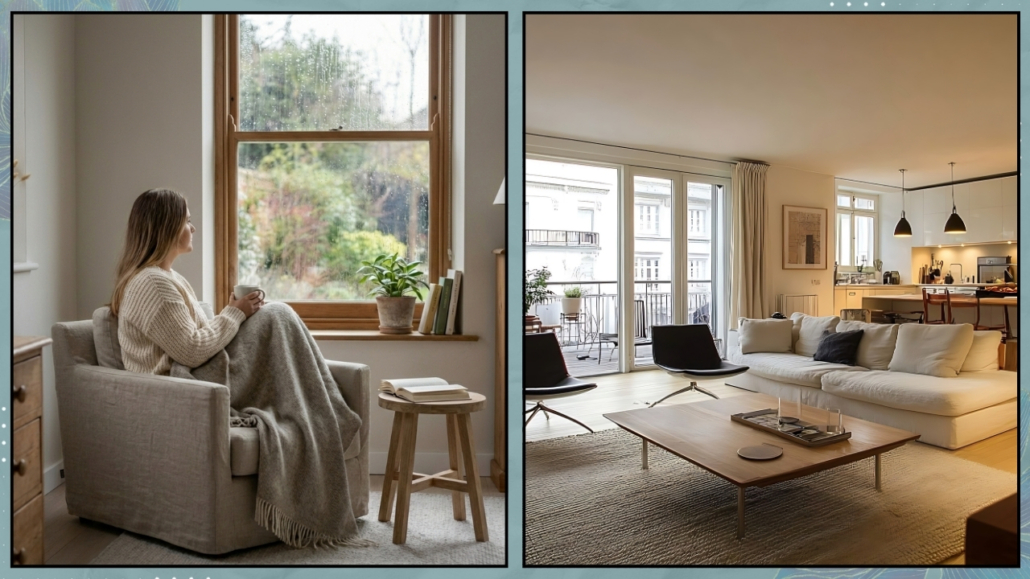
It’s a tool that helps you create spaces that support your everyday life.
Spaces that make you feel more centered, calmer, and truly at home.
This principle is always true—even in imperfect homes.
(credits Gemini; Canva)
– A Final Thought
When we let go of myths, Feng Shui returns to what it has always been:
a practice that connects energy, space, and life.
A home isn’t just a container—it’s an energetic field that accompanies, supports, and reflects you.
When this field is in harmony, everything else begins to flow.
If you feel your home could support you better, but don’t know where to start, remember: you don’t need a revolution.
The right home isn’t the perfect one.
It’s the one that takes care of you.
Sometimes, all it takes is a shift in perspective.
If you’d like, we can do that together.
Write to me—I’d be honored to guide you on this journey.