
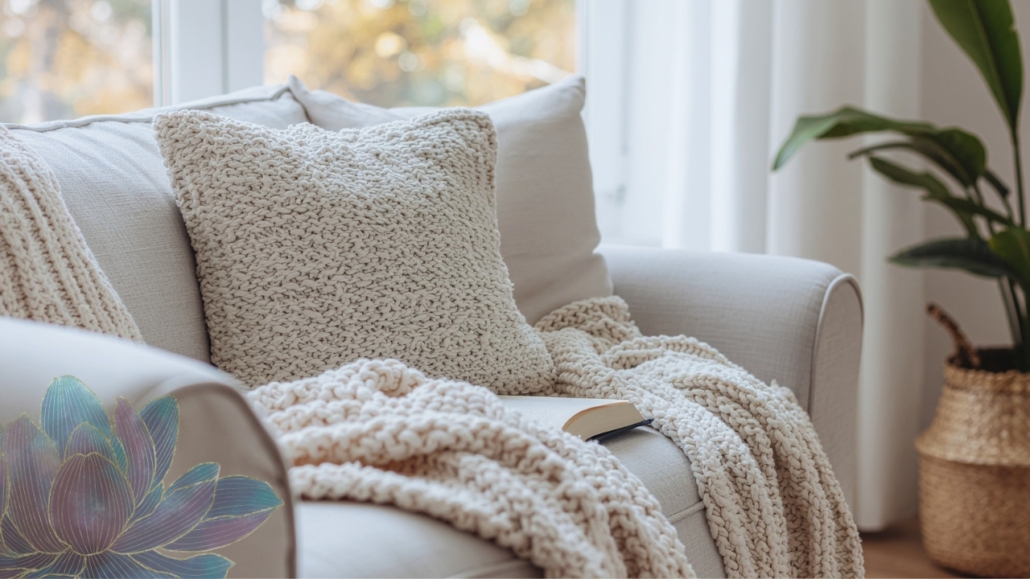
A sensory home is not a perfect home. It’s a home that speaks to you through the senses, that calms you, that welcomes you when the world outside moves too fast.
We live in a time that constantly demands speed, presence, and performance.
And often, when we finally return home, we carry all of that with us. Instead of truly relaxing, we keep moving almost on autopilot.
We turn on the television, pick up our phone, start tidying up something, and move from one room to another without ever really stopping.
And yet, we are finally home.
Maybe that’s exactly the point: our body does not always perceive home as a place where it can let its guard down.
We often think about interiors only through aesthetics.
The truth is, we do not simply “look at” our home. We inhabit it with our entire body.
Every day, our senses collect thousands of pieces of information from the environment around us.
If your home is designed only to look “beautiful” while ignoring your senses, you may end up living in a space that quietly fuels your stress instead of restoring your energy.
The home as an antidote to “noise.”
Our nervous system is constantly overwhelmed by artificial stimulation: blue light, plastic surfaces, and harsh and repetitive sounds.
Designing a sensory home means creating a space that genuinely helps the nervous system slow down and recover from everyday overload.
Here is how we can turn the five senses into tools for inner architecture.
Touch: the first language of calm
Touch is our oldest sense, the one that has accompanied us since birth.
Throughout our lives, it remains the body’s most immediate way of sensing safety.
The body trusts what feels natural.
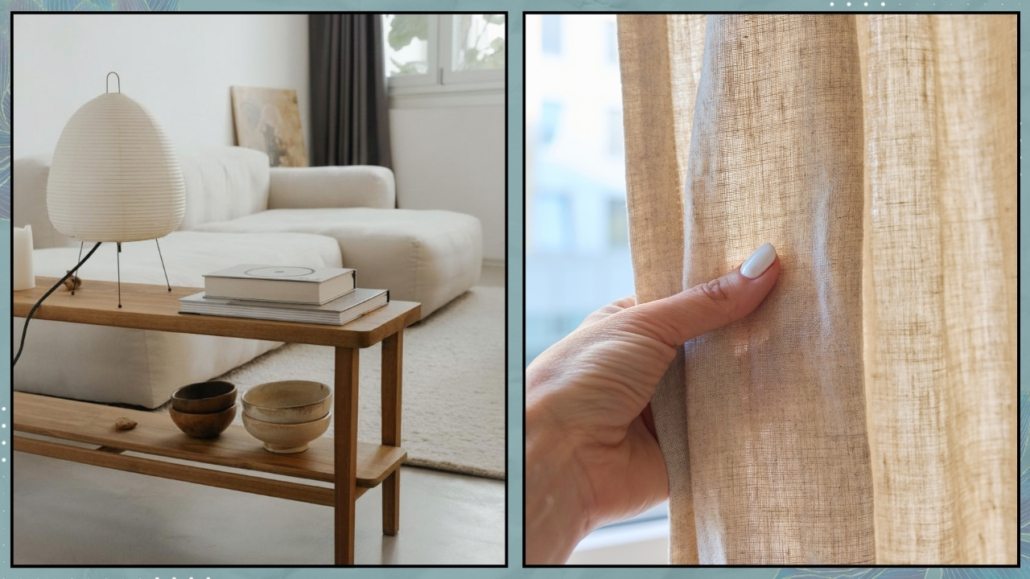
Touching solid wood, feeling the irregular texture of linen, or the porous surface of stone sends an immediate signal of safety and grounding to the nervous system.
My advice? Whenever possible, reduce the use of cold synthetic materials. The body responds better to what feels alive, natural, and imperfect.
Choose fabrics that invite touch.
A home that you cannot touch is a home that cannot truly welcome you.
(Credits: Canva)
Light: the rhythm that regulates you
Light is not just a technical detail.
It is rhythm, language, and a way of guiding you through the day.
Natural light wakes you up, opens you up, and reconnects you with the outside world.
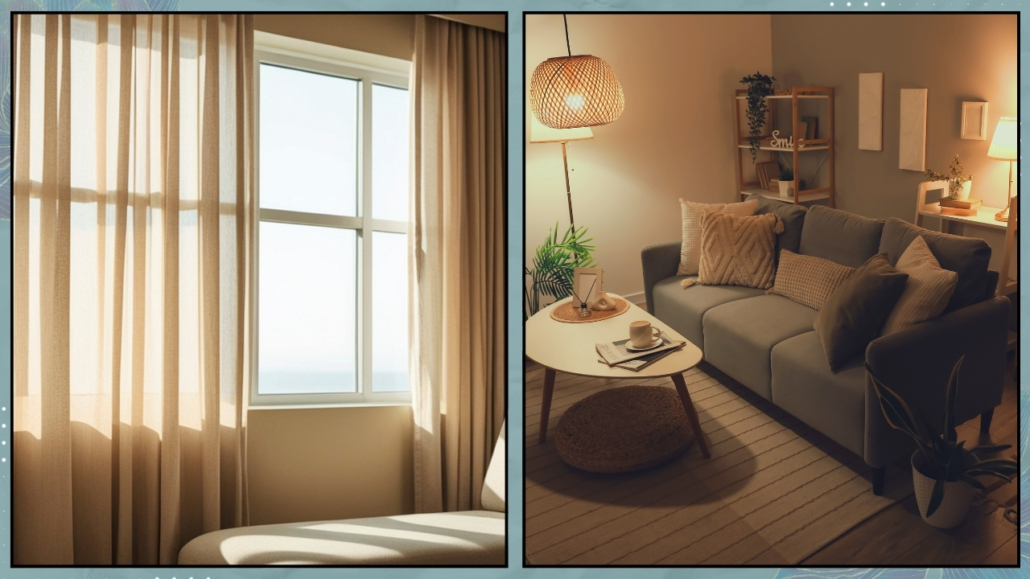
Warm light creates a sense of calm and gently prepares the body for rest.
A sensory home does not rely on one “perfect” type of lighting. It uses different kinds of light for different moments.
A soft lamp glowing in the evening, a candle inviting you to slow down, an unobstructed window allowing daylight to enter freely.
Light creates atmosphere, but more importantly, it shapes inner states.
And when the rhythm of the home feels harmonious, you begin to feel the same way too.
(Credits: Canva)
Sound: the invisible landscape that surrounds you
Some homes seem quiet, yet they keep the body in a constant state of tension.
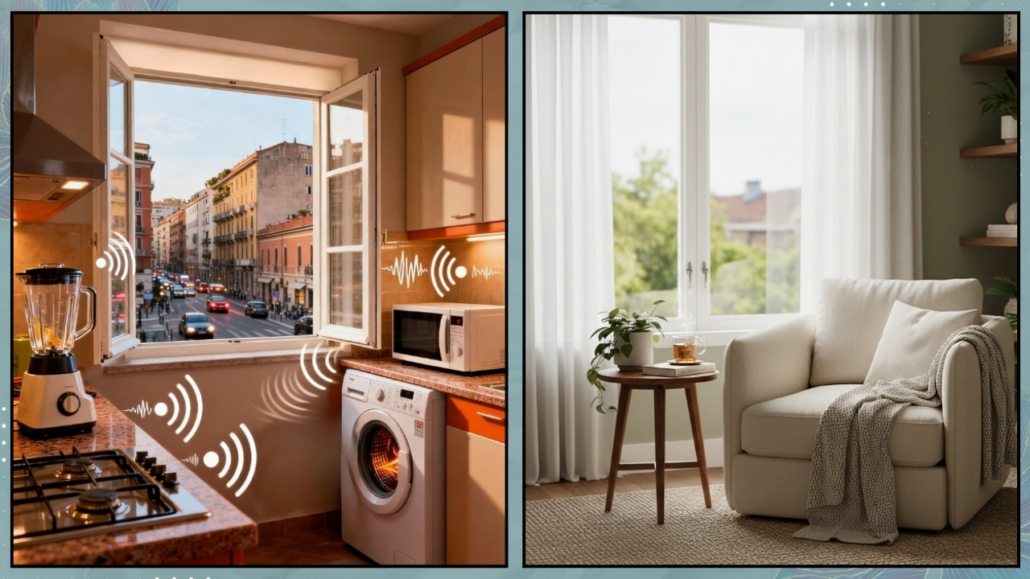
The echo of overly empty rooms, appliances always running, background television noise, and the constant sounds we have started to consider “normal.”
The problem is that the nervous system does not stop listening simply because we stop noticing.
On the other hand, some spaces almost seem to slow your breathing down.
Textiles that absorb sound, soft music, curtains moving gently with the air, even the real silence of certain corners of the house, can completely change the way a space feels.
(Credits: Canva; Gemini)
Scent: the emotional memory of home
Scents speak directly to our emotions.
They can instantly bring back a memory, a feeling, or a moment when we felt safe and well.
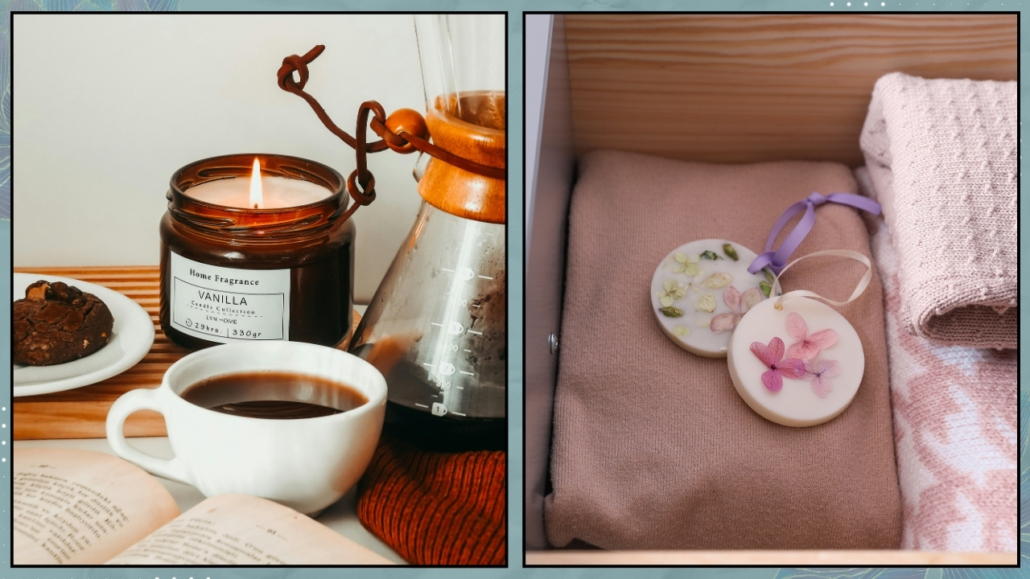
A sensory home carries a scent that reflects its identity. Not a “perfect” smell, but a living one – wood, fresh bread, a natural candle, eucalyptus branches, laundry drying in the air.
Scent is identity.
It is the invisible signature of your home.
And when you walk in and recognize that familiar scent, your body immediately understands that it is in the right place.
(Credits: Canva)
The rhythm of spaces: when the home moves with you
A sensory home is not static.
It is a living organism that moves and evolves with you.
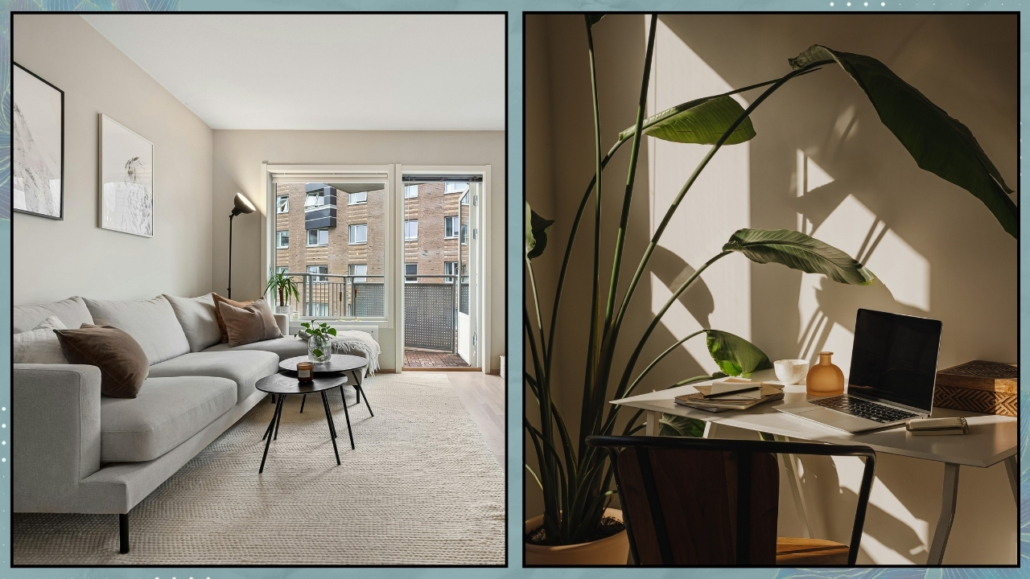
It means creating corners that invite you to slow down, leaving room for breathing space, avoiding the need to fill every inch, allowing light to flow in, and choosing a rhythm that reflects who you are.
This is not about style. It is about energy.
When you enter a space that “breathes,” you feel it immediately: the body softens, the breath deepens, the mind opens.
(Credits: Canva)
Toward a new way of living
Designing through the senses is not an aesthetic luxury.
It is a biological necessity.
When we stop decorating only for the eyes and begin designing for the nervous system, the home stops being a container and becomes a form of care.
And you—how do you feel when you walk into your home?
Do your senses feel welcomed or overwhelmed?
If your spaces stimulate you more than they comfort you, maybe it’s time to listen more closely to how your body feels at home.
If you’d like, I can help you rediscover your spaces with a more conscious perspective, transforming them into environments that are not only beautiful, but also able to support you, calm you, and bring you back to presence, breath, and authenticity.
Because feeling at home is not only about what we see.
It is a deep human need connected to everything we feel.
This post is also available in: Italian




Leave a Reply
Want to join the discussion?Feel free to contribute!