Posts

The function of the rooms in your home is something we usually take for granted.

When we think about our home, we often start with a simple question: “What do I like?”

We seek inspiration, save images, explore colors, furniture, and styles.

We flip through magazines or scroll on Pinterest and imagine what our living room or bedroom could look like.

And yet, there is an even more important question that almost no one asks: “What does this room really need to do for me?”

Because, before style, colors, or furniture, every space has a specific purpose: to support a part of our daily life.

When we ignore this function, a common problem occurs: the house may look beautiful, but it doesn’t truly function.

Spaces become confusing, objects start to pile up, and we often feel that something is missing, even if we can’t clearly explain what it is.

Every room supports a part of your life.

The function of the rooms in your home isn’t a rigid rule or a technical definition.

It’s simply the way each space supports what you do every day.

  • The living room, for example, is a space for connection.
  • A bedroom is a place for rest and regeneration.
  • The kitchen is the center of preparation and often of sharing.
  • An entryway marks the transition between outside and inside.

When this function is clear, everything else becomes easier.

Furniture choices feel more natural.

Objects find their place.

Movement through the space becomes fluid.

When the function of the rooms in your home isn’t clear, the opposite happens.

The space fills with things but loses direction.

And very often we try to solve functional problems with aesthetic solutions, so we:

  • change the wall color.
  • move the furniture around.
  • buy new objects.

But the problem isn’t the style.

The real issue is that the space isn’t truly supporting the life happening inside it.

A home works well when every room understands its role.

(Credits: Canva)

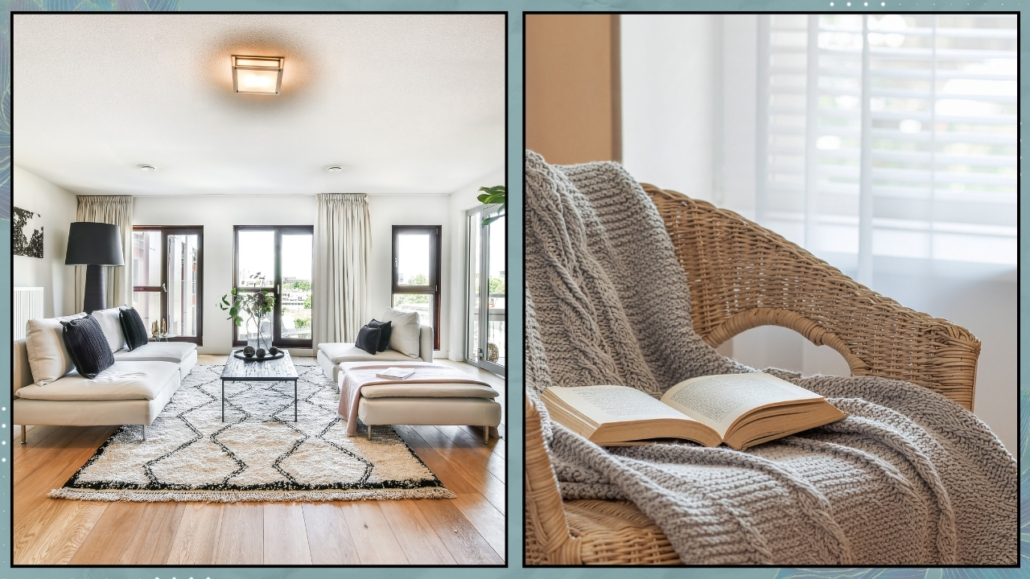
The living room is not just the TV room

In many homes, the living room revolves entirely around the television.

The sofa faces the screen, the furniture follows that logic, and the entire room ends up serving one single function: watching something.

But the function of the living room is much broader.

It is a space for meeting, talking, and sharing.

It is where we welcome others and spend much of our free time.

When we design the living room only around the TV, we reduce the room to a single function.

When we think instead about how we want to live in that room, the space changes completely.

  • A small conversation area appears.
  • You might add a chair for reading.
  • The sofa is no longer the only focal point.
  • The coffee table becomes a support instead of a storage surface.

Small changes that restore the living room’s original function: being a space for connection.

(Credits: Canva)

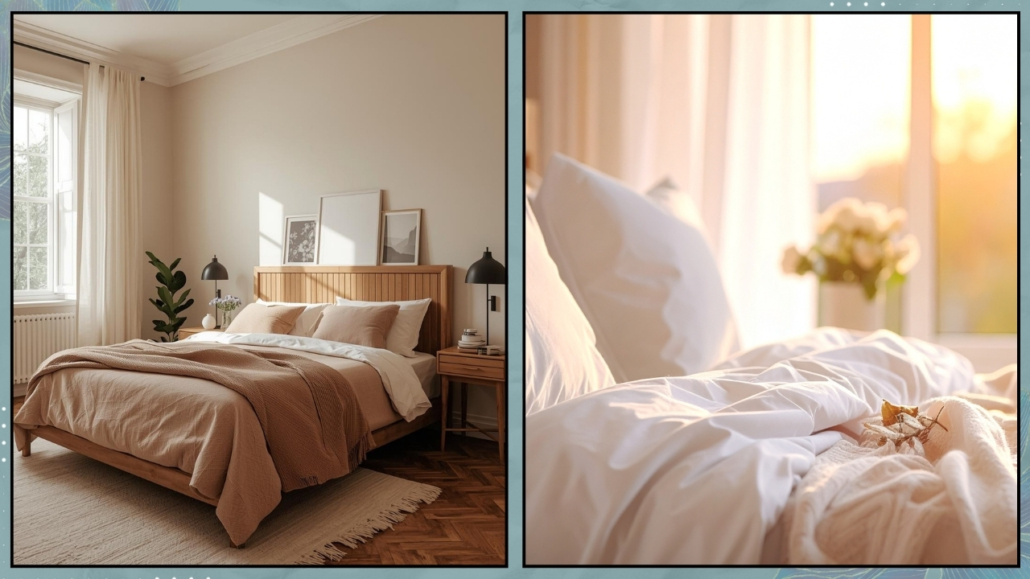
The bedroom is not just a place to sleep

The bedroom is one of the most important spaces in the home.

It is the place for rest, but also for protection and energy recovery.

And yet, it is often treated like any other room.

It becomes a storage area for objects, an extension of the living room, a space full of electronic devices, bright lights, and constant stimulation.

When the function of the bedroom becomes unclear, the quality of our sleep also changes.

The space no longer invites us to slow down.

  • A chair becomes a place to pile clothes.
  • The nightstand fills with unrelated objects.
  • The lighting is too cold or too bright to support relaxation.

Designing a bedroom means returning to its main function: creating an environment that supports rest and regeneration.

Sometimes this means:

  • Reducing the number of objects,
  • Softening the lighting,
  • Arranging the space in a way that makes you feel protected.

Small choices that can completely change how the space feels.

(Credits: Canva)

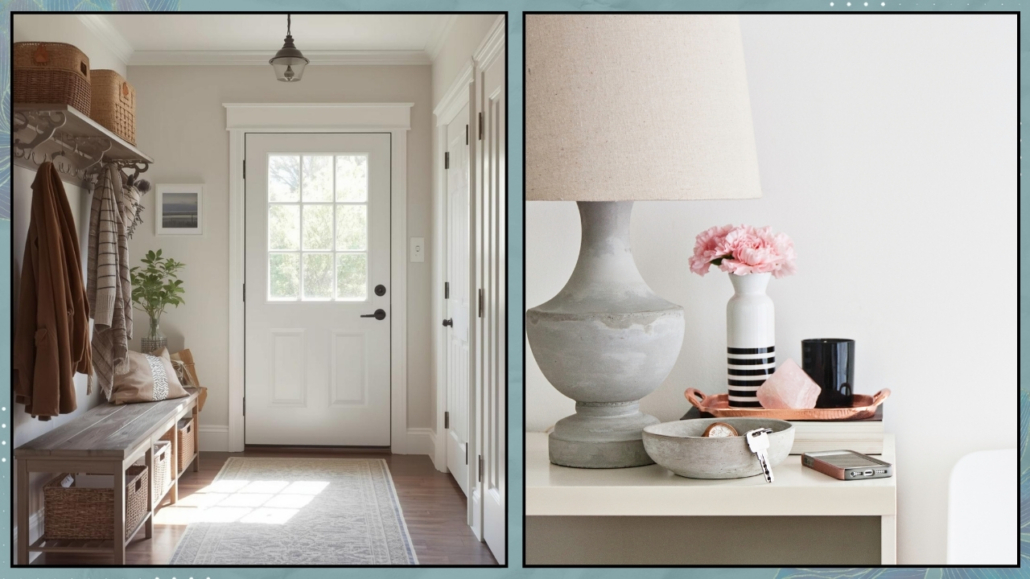
The entryway is not a parking area

Among all the rooms in a home, the entryway is probably the most underestimated.

It often becomes the place where we drop everything that comes inside with us: shoes, bags, jackets, keys.

A transitional space that almost disappears.

And yet, the entryway plays an important role in the home.

It is the space that marks the transition between outside and inside.

It is the first space we encounter when we return home and the last one we cross when we leave.

If it feels chaotic or disorganized, we enter the house already carrying a sense of disorder—or we leave with a subtle feeling of discomfort.

But when you design the entryway with care, even with something as simple as a small surface and soft lighting, it becomes a welcoming gesture or a gentle caress that accompanies you as you leave.

It does not require a large space or complex solutions.

It simply requires restoring the function of this area: guiding the transition and offering a welcome or a “catch you later”.

(Credits: Canva)

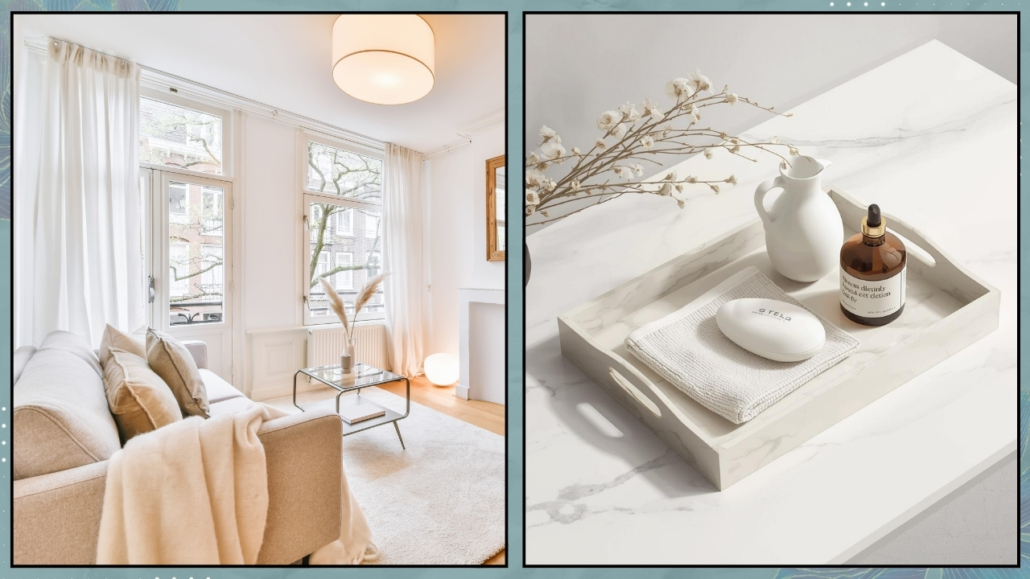
When the function is clear, the home becomes simpler

Many decorating problems start right here.

We seek aesthetic solutions in spaces that actually lack a clear function.

We change furniture, colors, and objects.

But the real question is often much simpler: does this room really serve its purpose?

When the function of the rooms in your home is clear:

  • Spaces become easier to understand.
  • Rooms feel more coherent.
  • Objects stop accumulating.
  • Movement becomes natural.
  • The home begins to function like a system.

And when a home works well, the way we live in it changes, too.

(Credits: Canva)

Function comes before decoration

Designing a home doesn’t mean filling spaces.

It means understanding how you want to live in them.

The function of the rooms in your home is the foundation for everything else: layout, furniture, materials, and atmosphere.

When you start from here, even aesthetic choices become more natural and long-lasting.

Because you’re not following a trend.

You’re creating a space that works for you.

(Credits: Canva)

And if something doesn’t feel right…

If you feel that a room doesn’t truly work—even if it looks well decorated—the reason is often simple: the function of that space was never clearly defined.

Sometimes all it takes is pausing for a moment and looking at your home with fresh eyes.

Ask yourself a simple question: “What does this room truly need to do in my daily life?”

This question can completely change the way you look at your spaces.

Because a home isn’t just a collection of rooms to decorate.

It’s a living system that accompanies you every day.

And when the function of the rooms becomes clear again, the home stops asking for your energy and starts giving it back.

(Credits: Gemini; Canva)

If you feel that your spaces could support you better, but you don’t know where to start, remember that you don’t need to change everything.

Sometimes it’s enough to bring the function of the rooms in your home back to the center.

And if you’d like, we can do that together, write me here.

The idea of having a luxurious home appeals to everyone, no doubt, but it is also a fact that you cannot always afford to spend large prices on furnishing.

However, some little tricks will allow you to have a home that looks more luxurious and perhaps designed by an expert!

Let’s look at them together:

1 – WALLPAPER

No, don’t think about the wallpapers our grandparents had! There are all kinds and for all tastes on the market today!

(credit coverdesign.it)

Without necessarily opting for the super-colored ones (which should not be banned, we’d miss it), think of a neutral color, but one that carries different textures.

(credit demart.it)

It is not mandatory to cover all four walls: you can also do just an accent wall or a bookcase background.

The visual impact of the wallpaper is powerful and immediately gives the idea of something sophisticated and elegant.

2 – BOISERIE and MOLDING

We saw it in the 2021 trends, and again, it has nothing to do with what our grandparents had.

However, adding details like these means bringing in textures, but most importantly, that touch of elegance!

These elements create visual interest and immediately make the room look “richer.”

(credit it.decorexpro.com)

Again it is not mandatory to use it, as with wallpaper, on all four walls, but you could use it in only one that will become the room’s focal point!

Beware that this kind of decoration is suitable for classic style but also a modern and contemporary style!

3 – CHANDELIERS

Chandeliers are items that can enhance the aesthetics of a room if properly chosen and placed.

The chandelier usually makes the ambient light, but if properly placed above the table or on the island, it will indeed help create a focal point by emphasizing that specific area.

(credit Nicole Franzen; zephyrandstone.com.au; roeserhomes.com)

Depending on the chandelier you choose, you will undoubtedly add a touch of personality and style.

Always consider, when choosing, the colors, style, and materials you have chosen for the walls, furniture, and accessories!

Try to create cohesion with the other elements in the house!

When the chandelier falls on a rectangular table, remember to get it lengthwise or put more than one so that you can suitably illuminate everything!

(credit Pinterest; Poliform; Pinterest)

4 – ACCENT SEATING

We often have the habit of buying sofas and armchairs in agreement; however, putting an armchair or seats with contrasting shapes, materials, and colors with the couch will give the room a different, more luxurious perception.

Doing this is also a great way to bring a touch of color and different textures to that room and, thus, effectively break the monotony and make it more interesting!

The room will look more elegant, sophisticated, and studied!

(credit villa Bellaria umbria Ph Kristian Septimius Krogh)

If the seating is totally different from the sofa, remember to “justify” it, perhaps by picking the color in the pillows, pictures, or other decorative objects.

That will make the environment harmonious!

You can find many different seats on the market and at all prices; what they have in common, as mentioned before, is that they will give emphasis and character to any room!

(credit Ikea)

5 – PILLOWS

Pillows are another beautiful way to bring in textures and colors.

Putting a couple of pillows on the sofa that, as written a few lines ago, recall the different seat, or some color present in the decorations, will give a sense of harmony and keep everything well balanced.

(credit Pinterest; halfwaywholeistic.com; Pinterest)

Putting pillows on the bed is also a good idea; you can place them in various ways, creating beautiful compositions.

That will give importance and elegance to the bed.

(credit Vivere lo stile; Brittany Niemer; Etsy)

Taking off and putting on pillows every day takes a little time, of course, but it is an investment that the final result will amply repay!

6 – CURTAINS

Curtains dress the home, bringing, too, textures and colors.

They bring warmth and elegance.

A pretty rod anchored high up, just below the ceiling, and soft, well-draped curtains that come to lean on the floor will make any room look decidedly more sumptuous.

(credit interiordesignexplained.com)

It is not mandatory to have highly pricey curtains: even at Ikea, you can find beautiful low-cost ones, but the dramatic effect they give is really unique.

(credit alexanderpollock.com.au)

If space allows, you can put drapery curtains also in the bathroom and kitchen, giving elegance and that extra touch to those two rooms as well!

7 – MIRRORS

The mirror is functional for reflecting oneself, but it is also an object that stands out in any room.

Properly placed, it amplifies light and can even give the illusion of a larger space than it actually is!

(credit Tomasella.it)

Spaces seem to flow better because its ability to reflect creates a kind of continuity, but most importantly, it provides a focal point that draws attention and enhances the room.

Mirrors resting on the floor, uniquely shaped mirrors will be able to give that extra touch of character and style!

(credit Living-corriere)

8) USE SYMMETRY

The human mind needs balance, and symmetry is a form of it.

When you furnish and decorate, try to create symmetries; you don’t have to do it all the time: it might even be boring after a while, but for example, putting two equal table lamps at the ends of the console could be one way.

(credit sarahshermansamuel.com)

Using symmetry with objects or some furniture will immediately give the impression of something definitely researched.

(credit callastudio.com)

9 – ATTENTION TO DETAILS

Details can change the face of rooms: so pay attention to finishes such as handles or faucets!

(credit Franke; Frattini; gaiainterni.com)

I have already spoken about this in a previous video, but the same kitchen, sink, or cabinet with different faucets and handles will give different impressions!

On the market, you find endless variations of materials and shapes, both as faucets and handles and at all prices, but these are details that can actually make a difference and make your home feel more luxurious!

(credit Ikea; Gucki; Ikea)

They are easily changeable elements that, correctly chosen, can give your home a touch of elegance and style.

10 – PLANTS AND FRESH FLOWERS

Plants bring color and textures into the home, and fresh flowers bring fragrance; all of these things elevate our perception of the ambiance.

Plants, as mentioned other times, bring us back to nature, allowing us to feel better; in particular, the scent of fresh flowers helps lower anxiety.

(credit @homepolish)

So plants and flowers have a dual function: they bring beauty, elegance, and well-being too!

Orchids, lavender, eucalyptus, and gardenia add a touch of elegance and a pleasant scent to any room!

If you don’t like cut flowers, you can also bring fragrance with candles and diffusers; those will also be very effective in enhancing environments.

Avoid fake plants and flowers except for the occasional small arrangement here and there!

Then if, like me, you’re not exactly a green thumb, know that there are very easy-to-care-for plants that are “big talkers,” as Simona Borgia, the urban gardener, says in this video!

One more note, it seems almost silly to say, but clutter is really the opposite of luxury!

So everything must be suitably stored and nothing out of place!

The clutter otherwise could ruin all the study and work done!


I hope this article was helpful and you love it; in case, let me know in the comments!

Feel free to share it with anyone you think might be interested, I will be honored, and it will help me get my name out there.

If you feel that your home, or some environment of it, does not reflect you enough, do not wait any longer and book your consultancy!