Designing your home is much more than decorating. It means creating a harmonious, functional system — not simply adding furniture or decorative pieces.
Many people confuse decorating with designing, and they end up with spaces that look beautiful but feel impractical, or rooms that don’t truly reflect who they are.
Understanding what it truly means to design your home is the first step toward transforming your spaces into a place that supports you every day, rather than simply filling them.
Today, I want to guide you through this distinction. Because when you truly understand what it means to design your home, you can completely transform the way you live in it — and even your daily well-being.
– Decorating and designing are not the same thing
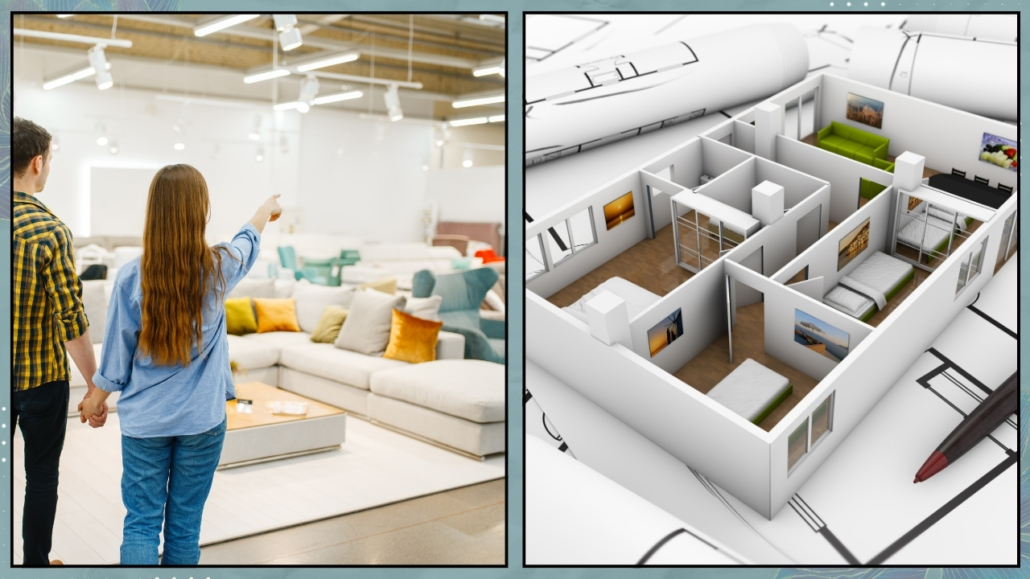
Decorating means choosing elements such as furniture, colors, materials, and decorative objects.
It’s often an immediate, instinctive gesture, guided by aesthetics or by the emotion of the moment.
Designing, instead, means creating a system.
A coherent, intentional whole that considers how you live, what you need, and how you move through the space.
When you decorate, you start with what you like.
When you design, you start with what you need.
Decorating is like choosing a dress because you love the color.
Designing is understanding who you are, what you want to express, and how you want to feel when you wear it.
You can own beautiful furniture and still feel a sense of visual chaos, follow every trend and still not feel at home, or keep buying object after object and never find the harmony you’re looking for.
Because what’s missing is a vision.
And without a vision, even the best choices remain disconnected fragments.
(credits: Canva)
– What it really means to design your home
Designing your home requires taking a step back before making any purchase.
It means pausing and asking yourself:
- How do I want to live in this space?
- What do I truly need?
- How do people move through this room?
- How do I want to feel when I walk in?
Function comes before aesthetics.
And when function becomes clear, aesthetics follow naturally.
A living room is not a container for a sofa and a TV. It’s a place to welcome, to share, to relax, to breathe.
A bedroom is not just a bed. It’s your space for restoration, protection, and slowing down.
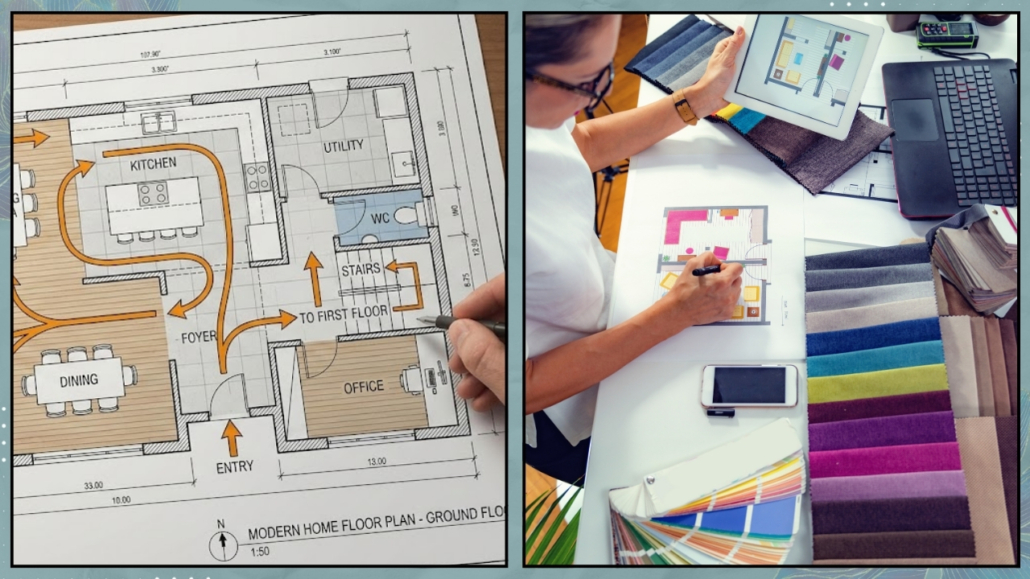
Designing means observing flows, proportions, and the relationships between rooms.
It means creating continuity, balance, and coherence.
It means allowing spaces to communicate with each other, so they don’t feel like isolated islands.
It’s not only about beauty.
It’s about experience.
When I work with my clients, I never start with furniture. I start with them — their habits, their priorities, how they want to feel in their home.
Because a house is not a stage set.
It’s daily life.
(credits: Canva)
– The signs you’re decorating (and not designing)
If you recognize yourself in one of these points, you may be decorating without a clear project:
- You chose furniture because it was on sale or on trend.
- You started buying pieces without a clear overall vision.
- Each room feels disconnected from the others.
- Your entryway has become a drop zone instead of a welcoming space.
- You own beautiful pieces, but the overall result feels off.
- You constantly feel like something is missing, but you can’t name it.
- You’ve repainted the walls more than once and still feel unsatisfied.
- You keep moving objects around, hoping that “sooner or later” it will work.
It’s not about taste.
It’s about a method.
Without a project, you accumulate choices.
With a project, you create an experience.
(credits: Canva)
– Why designing your home changes everything
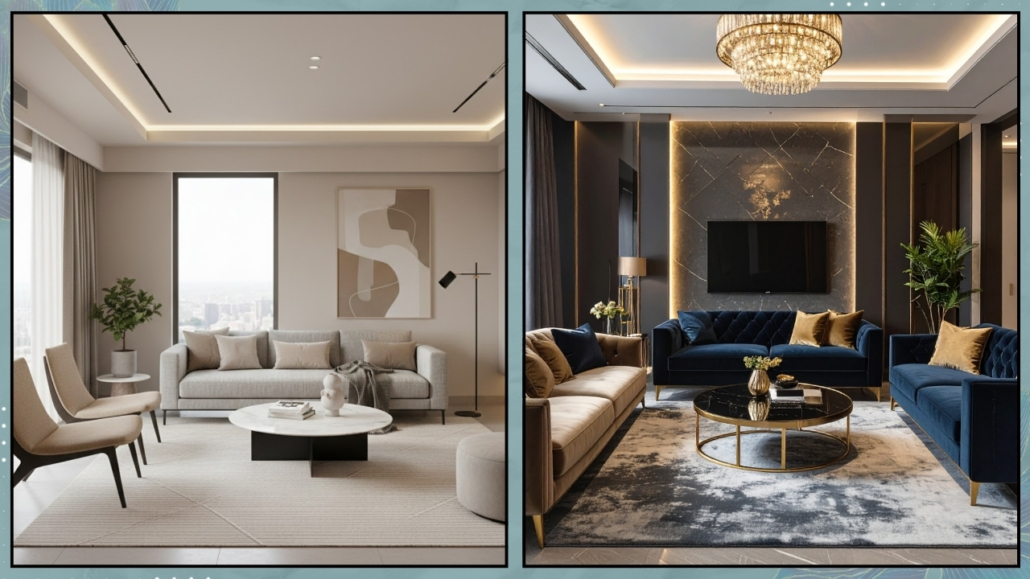
When you start designing your home intentionally, a very clear shift happens, and you:
- Move more easily through your spaces.
- Find things faster.
- Experience less visual clutter.
- Notice more balance.
- Live in your spaces with more calm and presence.
Your home stops being just a collection of objects and becomes a place that supports you.
And that truly impacts your mood, your energy, and your relationships.
A space that works helps you feel more centered, grounded, and truly yourself.
A space that doesn’t work — even if it looks “beautiful” — creates a subtle, almost invisible tension that stays with you.
Designing your home means caring for your daily well-being.
It’s not a luxury.
It’s quality of life.
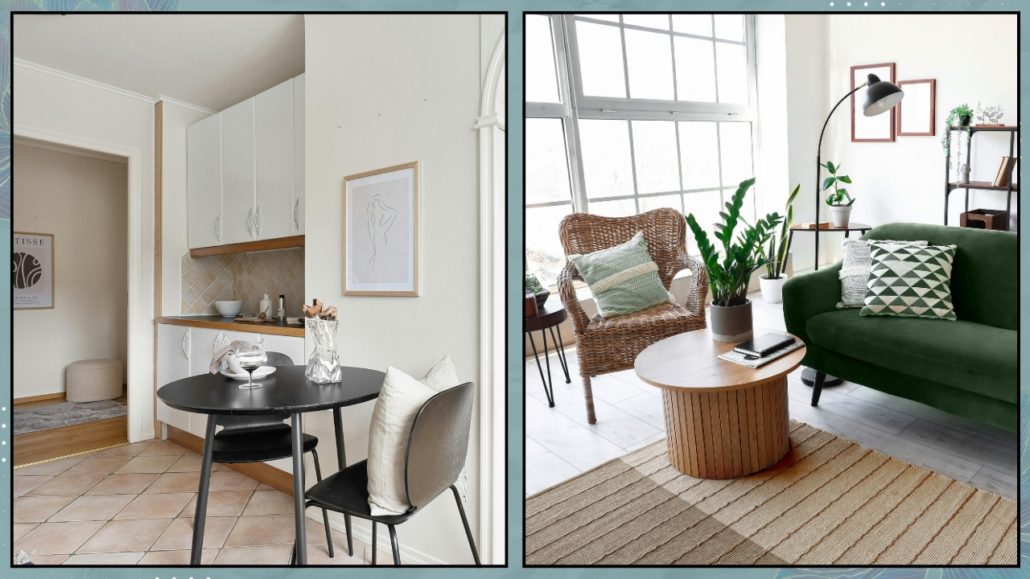
(credits: Canva)
– Maybe you don’t need new furniture
If your home looks beautiful but doesn’t truly represent you, buying more may not be the answer.
Maybe you need to pause.
To revisit the foundations.
To reconnect with your vision.
Often, the problem isn’t what you chose.
It’s how you chose it.
A clear project helps you create order, clarify priorities, avoid costly mistakes, and prevent endless second-guessing.
It allows you to see the whole before focusing on the details.
Decorating fills a space.
Designing creates an experience.
If something feels off, it’s not a failure. It’s a signal.
And sometimes all it takes is an external perspective, a guide, a clear method to transform confusion into balance.
Your home deserves more than a sequence of purchases.
It deserves a project that truly reflects you.
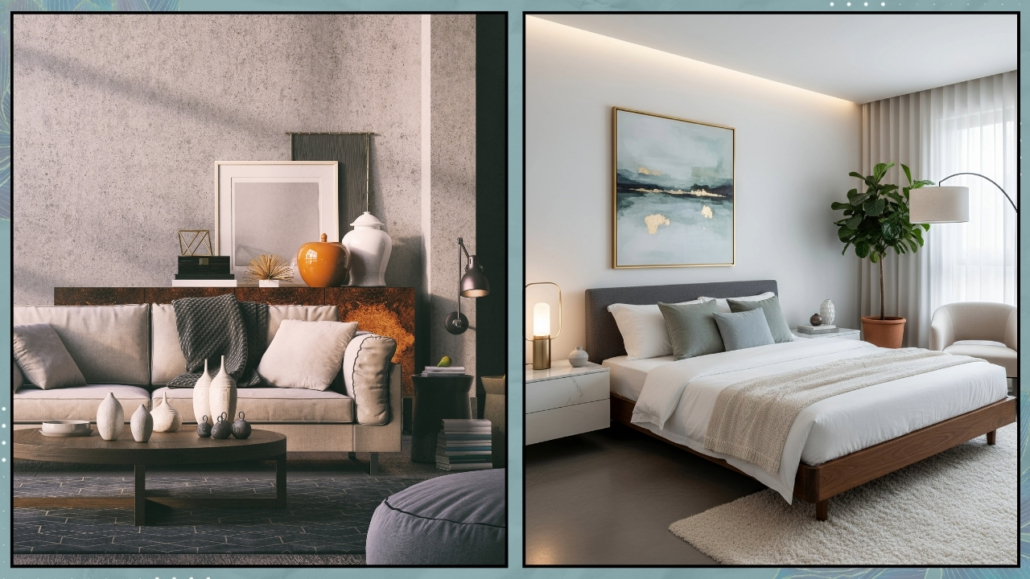
(credits: Canva)
– And if you feel it’s time to take this step.
If, while reading these words, you recognized something about your home — or about yourself — maybe it’s time not to do it alone.
Designing your home requires vision, method, and a willingness to listen deeply — to yourself and to your space. It also requires someone who can look at your spaces with fresh eyes — without judgment, with sensitivity and expertise.
That’s why I’m here.
To help you see what you can’t see from the inside, build a clear direction together and transform your spaces into a place that truly supports you.
If you’d like to understand where to start, we can talk.
Write to me — and let’s begin building the vision your home deserves.
Is it possible to do on-line consulting: here I explain how!